

When good people start leaving, most leaders blame the workload: too much to do, too few people, long hours and a lot of uncertainty. It’s a fair guess, and it’s almost never the whole story.
Most of us have had stretches of long hours and real uncertainty that turned out to be some of our favorite times at work.
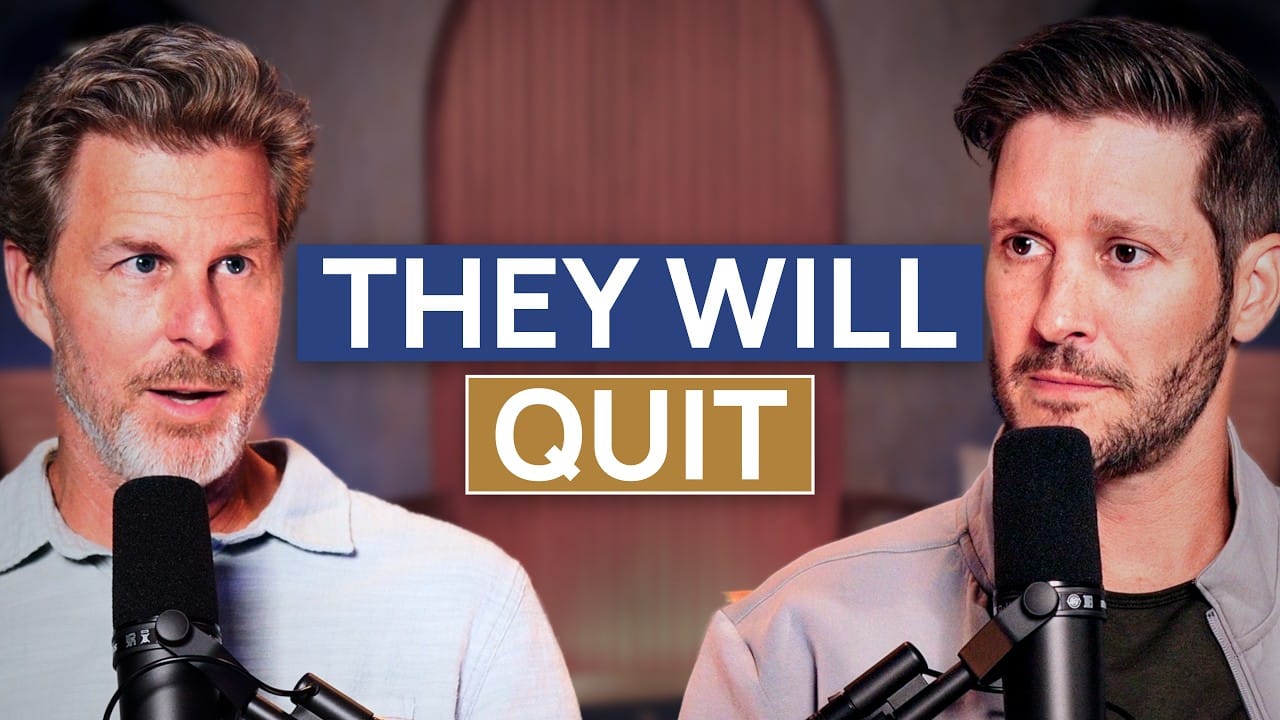
In this episode of In The Arena, Shaun Dyke and Chris Stemp talk through why good people leave and what a leader can do about it.
The workload becomes a reason to leave when something around it is missing. People will work hard, through long hours and a lot of ambiguity, if they can see a future in what they’re doing. They’ll keep going when they know their work is seen and valued.
And even people who feel valued will leave when the load gets so out of balance that there’s no end in sight. That’s usually when pay starts to matter, and even then, more money rarely makes up for a job with no future or work nobody values.
Turnover is a result, and it comes primarily from the climate a leader creates. This episode will show you how to retain that great talent.
What you’ll learn:
• Why “my team is overwhelmed” is often the wrong read
• What a leader can’t control, and why it can’t become a crutch
• “People don’t leave companies, they leave leaders,” and what that means for you
• Why teams that say they’re overloaded are often asking for more meaningful work
• Recognition that isn’t “you’re a rock star”
• Effort imbalance: three jobs, plenty of thank-yous, and no end in sight
• Where pay fits, and when it starts to matter
• Three questions to ask about each of your best people
• The simplest way to find out how someone wants to be recognized
• If you’re the one thinking about leaving: what to bring to your leader
⏱️ Chapters
00:00 Worried about losing your best people?
03:52 What you can’t control, and what you can
06:25 Is it really the workload?
10:25 Reason 1: They don’t see a future
13:16 Reason 2: They don’t feel valued
15:17 Reason 3: Effort imbalance, and where pay fits
18:49 Three questions to ask about your best people
📩 Have a question you’d like answered on the podcast? Email us at info@doortwo.com
📰 Get the models and frameworks from each episode in writing: https://doortwo.com/signup/
▶️ Prefer to watch? Full video episodes: https://www.youtube.com/@DoorTwo/podcasts
🔔 If conversations about leadership, identity, and growth resonate with you, follow the show.
In The Arena is a podcast about what it really means to live and lead well: the patterns that run us, the scripts we inherit, and the beliefs we reinforce without realizing it. Hosted by Shaun Dyke of DoorTwo.
Shaun (00:00)
This isn’t just a podcast about leadership. It’s about the patterns that run us, the scripts we inherit, and the beliefs we reinforce without even realizing it. We’ve watched this work rekindle marriages, renew parents’ connections with their kids, and reimagine the future of businesses. So if you’ve ever found yourself asking, “Am I becoming the person I’m supposed to be?” you’re in the right place. This is “In the Arena,” conversations about what it really means to live and lead well.
Shaun (00:31)
Welcome to In the Arena. My name is Shaun Dyke, Managing Partner here at DoorTwo. Joining me today, the illustrious Chris Stemp. Good to have you, Chris.
Chris (00:39)
Yes, glad to be back in saddle.
Shaun (00:40)
Tell us what we’ve got lined up for today.
Chris (00:43)
I think there’s a lot of factors today on people’s minds, everything from the economy to AI, just a lot of uncertainty. And in the workspace, I find that uncertainty often leads to questions of, “Am I in the right spot?” Which leads to fears of turnover. I would imagine in today’s world, good talent, your A players, your good team members come at a premium. We need them. And I also imagine there’s a lot of people right now trying to determine what does their future look like at a company. Is this the place for them? What do you see happening, and what is your counsel to leaders worried about turnover on their team?
Shaun (01:25)
Fun grounding. I think this is… You’ve left companies.
Chris (01:28)
Yeah. Oh, yeah. Almost everyone I worked for. Actually, all voluntarily.
Shaun (01:32)
Yeah, nice. We’re gonna see if we can keep you at this one.
Chris (01:34)
Yeah, please. I don’t wanna go anywhere.
Shaun (01:37)
And so have I. When you have left a company, why’d you leave?
Chris (01:43)
Wow. That is a good one. I will say, it wasn’t something that kicked me out. It was the reasons that kept me there were no longer. I think different times in my life, it was for different miniature reasons, right? I remember my first job, great job, had a lot of the things you want. But I was 21 to 25, and I thought, “I can’t be here for 50 more years.” And if that’s the case, why another five? So in this case, I didn’t see a future. And in truth, saying this live, I don’t think they painted it for me. So that was one there. Yeah, what about for you?
Shaun (02:23)
I’ll riff off mine as well. I think… I mean, I spent a long time at one company that I genuinely loved. I’ll acknowledge it. People know this. I was at Nestlé for a long, long, long time. And we’ll look how this connects in, but I reached a point where the work that I was doing, it was valued by my direct leader. But it started becoming not valued by the CEO of the business at the time.
Shaun (02:52)
So the work and the space that I was leaning into just really wasn’t what the remit was. It wasn’t what the focus was. And I found myself in a spot saying, “Wait a minute. What am I doing?” Like, if I’m working this hard on this thing that is not important, or at least I perceived, and all evidence was pointing to not important, to your point, I don’t wanna keep doing this. Why do I wanna keep doing this?
Shaun (03:17)
So I think we could line up 100 people, and probably 95 of them have left a job voluntarily, probably a large portion of them, and there’d be some reason that they left the job. If we listen closely to why people consider leaving or do leave, as a leader, you get some strong indications in understanding what you need to work on and how we need to lean into it.
Chris (03:42)
And as we talk about often, we walk the chain backwards. Okay, the result we get is caused primarily by, or an output of, the climate we create, which is from our behavior.
Shaun (03:52)
We’re gonna get to, as a leader, what can you do, what do you have influence and control over that will help you retain the incredible talent that you have there? And in many situations, that’s highly influenceable. But it’s also, in some situations, it’s not influenceable. So let’s say you find a spot where you’re like, “You know what? I’ve been working in this career field for a long time. The people around me are great. I get paid well here. It’s exciting. But I just have always wanted to pursue a career in kite-making. It’s just been something that I’ve been curious about doing.”
Chris (04:30)
How did you know?
Shaun (04:31)
It is kite-making, isn’t it?
Chris (04:34)
It is.
Shaun (04:34)
So the reason I’m saying that one is, let’s be conscious that there are some things that you as a leader can have direct influence on, and then maybe there are some things that at times great talent may leave. And the reason they’re choosing to leave is outside of what you can influence. And so that world exists 100%.
Chris (04:53)
Leader listening right now, they’re going, “Guys, I’m listening because I’m worried that my good talent might leave.” It’s okay to say, first, let’s understand some of the things genuinely are not influenceable as a leader, or very lightly influenceable, and that’s okay.
Chris (05:09)
And one thing I wanna highlight here, one of the best pieces of leadership advice I ever got, it was a company I was at not too long ago. I was given coaching, like they gave me a coach. It was an awesome benefit. And I said to my boss… She said, “What are you talking to them about?” I said, “Honestly, I don’t know if I wanna be here. Like, I don’t know if I wanna be at this company.” And she said, “Oh.” And I said, “Hey, let me ask you. I feel a little weird about that. You all are offering me this service of coaching, and I’m using it to consider if I wanna work here?” And she said, “Well, if you don’t, we can’t have you stay.”
Shaun (05:43)
We need to know. Yeah, exactly.
Chris (05:45)
And I remember being like, “That is intelligent.” Right? That’s intelligent leadership is, look, if somebody really doesn’t wanna be there or they’re questioning it, you need them to figure it out fast. So to your point, there are things we can do. There are some things we can’t do. Let’s leave what we can’t control out for a moment. Because I don’t want people to lean on that as a crutch.
Shaun (06:06)
The important thing is looking at what are my controllables and what I can lean into. So as a leader, what can I influence and what can I control into? As the leader, are you creating conditions where if you’re worried one of your key talents might be a flight risk, are you creating a space to understand what is going on? Now, while it’s important to know the granular thing, there are things that we know pretty confidently when you look into the research on why do people leave organizations. The most common, we hear all the time, the great phrase, “People don’t leave companies, they leave leaders.”
Chris (06:42)
They do, yeah.
Shaun (06:42)
They leave the person. And by the way, we would agree with that. I think that’s fundamentally accurate in that. So if you’re a leader and you’re sitting here and you’ve recently lost somebody, yeah, let’s hold up the mirror for a minute. Let’s not overly justify about systems or scenarios. Let’s start with one that says what is, I think, a common thing that people think people leave by. We’re working with a… we’ll remain nameless, but we’re working with a larger organization, and a lot of their internal and external metrics are suffering right now. They’ve got a lot of change. They’re evolving the way they’re trying to do business. They’re amplifying their importance on really still delivering on the customer need and the client need, but also trying to increase operational rigor. And that’s disruptive. It’s hard.
Shaun (07:29)
So when I’m chatting with their head of HR and a couple of other folks, they say, “I think I know the problem. So talk me through it.” And they said, “It’s just a ton of work. People have a huge amount of work on their plate right now, lots of priorities that we’re having to do, long hours of execution that they’re leaning into. And you know what? A lot of ambiguity and a lot of uncertainty.” And I said, “Yeah, that’s genuinely, it’s a lot, and it’s almost certainly not why they’re leaving.”
Chris (07:57)
So wait, let’s break this down for a second, because I agree. I’d say off the top of my head, top three reasons why we assume somebody would leave would be workload. We always hear lack of resources, I’m asked to do too much with too little. I think most people would be like, “Yeah, I think that is a reason.” What you’re saying is, it’s only a reason if the surrounding elements are not present. What are some of the surrounding elements that determine whether workload is, let’s call it, beneficial or detrimental to somebody’s work satisfaction?
Shaun (08:34)
Yeah. Let’s put you on the spot on one. It’s not uncommon that you’ve said your wife has been like, “Chris, it’s 10 o’clock. When are you gonna come to bed? Why are you working at 10 o’clock still?”
Chris (08:44)
Yeah. For me, a huge one is ownership. Man, this one hits home. I’m not doing work for you specifically to like my work. I’m not doing it going, “I think Shaun wants this, so I’ll do this, and I have to do it by tomorrow.” That rarely enters my mind. It starts there with a conversation, “What’s your vision? Do I align to it?” After that, it is pure, I can’t get it out of my head, it is enjoyment of creating the thing, doing the thing. So…
Shaun (09:16)
But you’re working long hours. And it’s unclear, ’cause we’re building it as we’re going. And you’ve got uncertainty among key stakeholders. And you got 900 things that are getting thrown at you and you’re doing. And you’re not, unless you… we need to have a conversation. You’re not, like, running toward the door.
Shaun (09:33)
So most of us have been in situations where we’ve had uncertainty, we’ve had long hours, we’ve had confusion, and it’s been some of our favorite times. Why? Like, what is the supporting part of that ecosystem that enables it? Let’s do this. Let’s hit, if you look at the research around, well, why do people leave? There’s kind of three things. Let’s nail those three things, and let’s talk about how they link into the work that we talk about inside of this space called climate.
Shaun (10:02)
Hey, everyone. Quick break from the episode. If you are curious about some of the concepts that we cover in this, like the ideas of underlying drivers of behavior, like motives or existential questions that drive who we are, can I encourage you to subscribe to the newsletter at doortwo.com/signup. From that, you’ll get insights and awareness of some of the topics that we discuss more deeply. Now back to the show.
Shaun (10:25)
So first one is people tend to leave because they say they don’t see a future. They don’t have any clarity or felt level of responsibility around, “What am I doing? I don’t understand what the business is doing. I don’t know where it’s trying to go. I don’t understand its collective purpose, and then I don’t understand how I fit into that state. So what it seems like for me is I have hit the end of the line, stagnated. I don’t have any more clear opportunity for responsibility. I don’t have any clarity around where we’re going as a business. You know, I just feel like I’ve really done all I can do here. And so I feel like I don’t have any future here to go any further.”
Chris (11:05)
Spinning wheels almost. Is that fair?
Shaun (11:07)
Yeah. Or just like, I come in each day and I’m asked to deliver A, B, C and one, two, three, and I do A, B, C and one, two, three, but that’s not where I wanna end my career. I’d like to do D, E, and F and four, five, and six. And I just don’t know that we’re gonna do that, and if we are gonna do that, I have no idea if they’re gonna call on me to do those things. So I feel like I don’t have clarity on what we’re doing, and I don’t have a felt level of responsibility around meaningful delegation to do bigger, better, more things.
Shaun (11:36)
This is a very common one that we laugh at. You see it all the time. People will constantly talk about, “Oh, my team’s just overwhelmed.” And when we evaluate their team, almost every time, they’re asking for greater levels of meaningful responsibility. “Will you please cascade down to me more opportunities to do more things?” Not just noise, but meaningful work that I get to do.
Shaun (12:00)
So this belief that it’s, oh, we’re overwhelmed, I’m not saying people aren’t working hard a lot of times, but most of the time, people are looking for greater clarity, greater insights into my core assets, developing those assets toward a goal so that I see a future in what I’m doing here. If I’m just drifting, it feels like… You said it earlier. Why did I leave a business? ‘Cause I thought, “I can’t be here 50 more years.” So that’s one of the key things.
Chris (12:30)
I wanna tell a story on this real quick because this is a great point you’re making about workload. It’s the type of work, it’s the responsibility you feel, and the value add. Good friend of mine, but everyone would know somebody like this. He’s in the healthcare field, right? He was an ER nurse. And I mean, you wanna talk about one of the busiest. You don’t stop. You almost never hear them say, “I can’t be in healthcare because of that.” That’s rare. You know what you hear? The bureaucracy of dealing with insurance companies. The amount of data I have to input rather than patient care. To get to your point, it’s not really about how much or the volume. It is what that represents to them.
Shaun (13:16)
Yeah, let’s do one. Let’s do… We’re gonna add three in here. People are very willing to work hard, work long hours, work in states of ambiguity if I see a future of what I’m trying to do. We’re gonna add two more to that as well. Second one, they don’t feel valued. What does that mean? That means I come in, I do a ton of work, and it’s just not seen, right? I’m putting effort in, I’m putting energy into it, and at best, maybe I’m getting criticized, maybe I’m getting critiqued, maybe I’m being evaluated on what I didn’t get done, but my daily work efforts, I don’t hear it.
Shaun (13:52)
The second-biggest reason people leave organizations is they feel like they’re just not valued at all. “I feel like the work I’m doing is just for naught. It’s not meaningful. It’s not having impact. It doesn’t matter.” I feel like sense of team is a huge effect inside of this. Feels like, I don’t know, I’m here, but I don’t feel a sense of belonging. I don’t feel a sense of pride in what I’m doing because I’m just asked to come in and do the same thing again and again and again, and maybe even more of it with less resources. So is it real that people start to be frustrated that the quantity of work I’m doing with the low level of resources is real? Yeah. But if you came to them with genuine appreciation, recognition, valuing them for the incredible amount of work they’re doing with the scarcity of resources they’re doing toward a realistic end-state goal and how that work helps align with their future career plans, different game.
Chris (14:48)
Exactly. Rewards in this sense and recognizing people, it doesn’t mean give the common, “Oh my gosh, great job. You’re doing so well. You’re a rock star.” All that nonsense, right? It can be, “Hey, this is so good, I wanna show the team tomorrow.” So it’s not saying, “You’re the best.” It’s showing people that the work that you put effort into is being seen, is being used, is being valued, is being recognized, all of those things.
Chris (15:17)
What about pay?
Shaun (15:19)
So pay’s a factor, right? But pay will actually, it drops into… Let’s drop into the third one, the last one we go to it. Third one feels connected and correlated, but it’s called an effort imbalance. So imagine this scenario. I work for a company, and this exists right now with somebody I’m working with. They work for a company, they have a pretty senior title in what they’re doing, and they do a good job. And the company acknowledges they do a good job. They know it. They feel valued.
Shaun (15:47)
They’re doing a merger right now, so they got a second job, so to speak, as part of the merger. And now they’re covering the job they were doing, the new job they’re gonna do, and since they’re quite good at those things, as part of the integration, they’re now also kinda got a third job, which is they’re part of the collective integration team on what they need to be doing. And everyone is saying, “Thank you. Nice job. You’re working really hard.” But it’s just at a totally untenable point. Now, let’s say in that scenario, if you were being asked to do all three of those and nobody was saying thank you, well, now super right now, you’re done.
Chris (16:24)
It’s gone. It’s gone.
Shaun (16:24)
Right? You’re gone, period. In this case, though, it can still reach the point of, “Look, I appreciate that you recognize how much work I am doing, but I am doing three heavy jobs with 16 hours a day worth of work and on the weekends with no light at the end of the tunnel in perpetuity.” And you know how this works. I joked with the individual, and I said, “You know the cool part about that, though, is like most organizations, you have three jobs, and so my assumption is you now have three salaries.” And they’re like, “Yeah, right.”
Shaun (16:55)
Of course that doesn’t happen, right? That’s not the case. So in that case, does compensation start to show up? Absolutely. ‘Cause the individual starts saying, “Wait a minute. I can go there, do a third of the work, and probably get a raise inside of the space.” So yeah, if they don’t feel those other elements tied into it, then there is a huge likelihood of getting ready to leave.
Shaun (17:18)
A guy I coach was with an organization, doing a pretty good job with it. He had his elements where he wasn’t winning, and they saw their elements where it is well. There was a mutual separation. He just took on a new job. The job is smaller, it’s a bit easier, and it had a 33% pay increase in it. So you’re not gonna see me sit here and say pay isn’t a factor. Of course it’s a factor inside of it.
Shaun (17:41)
However, you and I both know an individual that, she was actually looking at working with us and joining our firm, and then somebody reached out to her with a job offer. And the job offer was at a dollar amount that was crazy town. And we were both like, “Take the job.”
Chris (17:56)
Take the job.
Shaun (17:58)
“But let’s think about something. Why are they paying you at that level for that job?” And six months in, she was done. ‘Cause the job was terrible. I mean, terrible. The environment was a total mess. And so they were trying to retain you in total anarchy through what they were paying you.
Shaun (18:18)
So pay isn’t always that factor. It’s a component in it, but if you feel like, “I don’t see a future in what’s happening here. I feel like the work I’m doing isn’t valued.” Or even in a scenario where, “Yeah, you value my work, but you’re taking advantage of me.” This is the teacher using the student that answers all the questions to the nth degree, and so we’re just overloading them. Kind of hero culture stuff that we sometimes talk about. You’re asking this person to behave at a heroics level.
Chris (18:49)
Yeah. So with the last couple minutes we have, I love those three kind of ways to think about them, because in a lot of the things we talk about, look, is this exhaustive? No. Are there other nuances? Sure. But people don’t listen and search for these things to get the whole area. They wanna know, “What should I focus on?” And you gave them three. These are environmental. So if I’m listening and I go, “I got the three,” now, what are some common ways I can negate those three through creating this environment? How do I do that? What do I need to be aware of in the environment I’m creating as I lead?
Shaun (19:27)
I’d say a simple out of the gate one is, if you’re a leader, first put pen to paper and write the name Chris, and then ask those three questions next to it. Do I know what Chris wants for his future, and do I feel like he sees one here? Can you answer that question honestly? Second one is, do I help ensure Chris feels valued here?
Shaun (19:47)
Last one, when I look at Chris’s effort levels, do I overly rely upon him, and have I reached a point where there’s probably an imbalance that he’s feeling? So take stock first, then have an honest conversation. I get to sit down with Chris and I get to say, “I was thinking about it, and I think I know what you want for your future, and I see a path for you on it here, but I’m wondering if that’s true for you and if you see that same thing.” Create the dialogue. All things get solved through dialogue.
Shaun (20:14)
Most things get solved through dialogue. Then I get to ask those next few questions. In the work that you’re doing, and it sounds funny to ask it this way, when we talk about meaningful recognition, so we’re gonna drop that into valued, we always ask the question, “Do you know what the easiest way to determine that is?” And people comically will give you 900 different answers, and then ultimately we come back to just, no, ask them, “When you do an incredible job, I’d like you to know it. What does that look like for you?”
Shaun (20:41)
So can you have that conversation that helps ensure that you know how to have them feel valued for you? And then the last one was authentic stock of how you’re doing. “You’re taking a ton on right now. I don’t see a foreseeable future where we change your workload. Is it sustainable for you, or have we reached a point where we’re honestly pushing on you, making decisions whether or not you think you could stay here?”
Shaun (21:06)
Like, have that dialogue openly with them. And then I guess I would be remiss if I didn’t say, if you’re the person that’s listening and you’re thinking about leaving, have that honest conversation with yourself and then go sit down with your leader. “Hey, I was thinking about this.”
Chris (21:21)
Bring it to them.
Shaun (21:21)
“I don’t see a future. I’m not really feeling valued, and my effort and balance are a mess right now.”
Chris (21:27)
Yeah. So it doesn’t have to be complicated to be impactful.
Shaun (21:32)
Yeah. I’d say two ending statements around it with it, as we’ve said multiple times, this list is accurate and incomplete. That’s one. The second one I would say is, the solution is never as big as the problem.
Shaun (21:45)
So when you perceive this thing about, “How do I create retention for my highest talent inside of that?” There’s some really core, simple ways in which people would do it. Do your people feel valued? Do they see a future? And are we adequately balancing that workload? And I’ll tell you what, if they see a future and they feel valued, that workload becomes less important.
Chris (22:02)
Think about the amount of statements that people make on why they might leave. Imagine that we can boil most of those down. How much pressure does that take off of the leader? You don’t have to know every single thing. You don’t have to fix every imperfection, every blemish in the work that exists. But if you can nail those three, the likelihood that the rest of the imperfections wash away is really high.
Shaun (22:28)
Is incredibly high. You get to shift from a known point with a few targeted things that will have a material impact on it. Do you get to be better at it as you go on? Of course. Let’s start here.
Chris (22:38)
Love it. Shaun, thanks for dropping some knowledge today.
Shaun (22:41)
You bet, bud. Talk soon.
Chris (22:43)
Thanks for joining us “In the Arena.” If you wanna keep growing, the best thing you can do is join our weekly newsletter. It’s where we break down the biggest ideas from the podcast and share the tools and frameworks we use every day to help leaders live and lead differently. You can sign up for that at doortwo.com/signup. That is D-O-O-R-T-W-O.com/signup. And if you enjoyed the conversation, make sure to follow or subscribe wherever you listen. If you prefer to watch, head over to YouTube and check out our full video episodes filmed right here in our on-site studio. And remember, all growth starts with self-awareness. We’ll see you next time “In the Arena.”