

“Assume positive intent.” It’s in almost every company’s values and every team’s ground rules, and almost nobody argues with it. So why is it so hard to actually do?
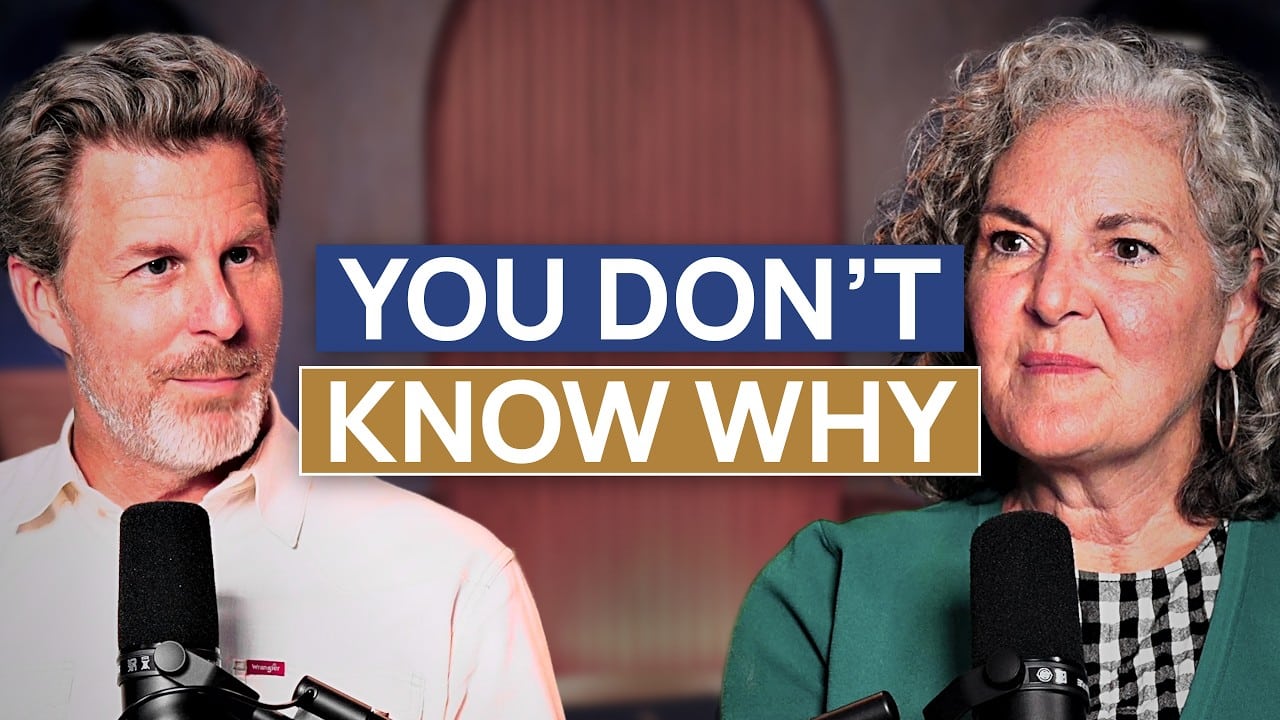
In this episode of In The Arena, Shaun Dyke and DoorTwo Consultant Anna Baldwin talk about why we read the worst into what other people do, and what to do instead.
It starts with a leader who behaved badly in front of his group, out of character for him. Anna could have called him out. Instead she asked him, “Are you okay?” He wasn’t. He’d gotten news right before he walked into the room, and he was carrying a lot.
Most of us give people grace while they’re learning. Once we decide someone “should know better,” we start treating what they do as on purpose. Then our own history fills in the rest. A new boss calls a meeting for 3pm on a Friday, and we’ve already decided what it means.
Shaun’s point: assuming positive intent is still an assumption. You saw what someone did. You didn’t see why. If you can’t get all the way to positive, you can at least stop assuming and ask.
If you lead a team or work for someone, you’ll come away with a simple habit: notice what you saw, admit what you didn’t see, and ask.
What you’ll learn:
• Why “assume positive intent” is easy to agree with and hard to do
• Why we usually go with our first reaction, even though we don’t have to
• Why we give babies and puppies grace, and when we stop
• How your own history shapes what you think other people mean
• What “innocent until proven guilty” has to do with your team
• The iceberg: what you can’t see about the people around you
• The 24-hour rule: have the conversation or let it go
• What to do the next time someone’s behavior sets you off
⏱️ Chapters
00:00 Why don’t we assume positive intent?
02:07 A leader’s bad day, and “Are you okay?”
04:37 Puppies, babies and “you should know better”
08:15 Your home movie, and the 3pm Friday meeting
13:21 The iceberg: what you can’t see in people
16:32 What if you didn’t assume intent at all?
19:15 The 24-hour rule, and what to do next time
📩 Have a question you’d like answered on the podcast? Email us at info@doortwo.com
📰 Get the models and frameworks from each episode in writing: https://doortwo.com/signup/
▶️ Prefer to watch? Full video episodes: https://www.youtube.com/@DoorTwo/podcasts
🔔 If conversations about leadership, identity, and growth resonate with you, follow the show.
In The Arena is a podcast about what it really means to live and lead well: the patterns that run us, the scripts we inherit, and the beliefs we reinforce without realizing it. Hosted by Shaun Dyke of DoorTwo.
Anna (00:00)
Every behavior, every move that that leader is doing, I’m filtering it through all my past experiences.
Shaun (00:07)
This isn’t just a podcast about leadership. It’s about the patterns that run us, the scripts we inherit, and the beliefs we reinforce without even realizing it. We’ve watched this work rekindle marriages, renew parents’ connections with their kids, and reimagine the future of businesses. So if you’ve ever found yourself asking, “Am I becoming the person I’m supposed to be?” you’re in the right place. This is “In the Arena,” conversations about what it really means to live and lead well.
Shaun (00:38)
Welcome to In the Arena. My name is Shaun Dyke, Managing Partner here with DoorTwo. Joining me today, the lovely Anna Baldwin. Anna, we haven’t got to do one of these in a while.
Anna (00:46)
It’s been a bit.
Shaun (00:47)
Here’s where we begin today. There are a variety of phrases that exist in the world that I think can get overplayed or overused, but they’re actually really meaningful, weighty constructs. We’re gonna talk about one of those, and the one we’re talking about is this idea of assume positive intent. I think categorically, that fits directly here. I think on some ways, you and I see this in every values statements that companies have. We see it when we’re having conversations about group norms that we’re gonna work with in a team at an off-site session. They’re gonna assume positive intent. And I think that for the most part, it sounds so unquestionably good. Everyone says, “Yeah, of course I’m gonna assume positive intent.” But I don’t know that we all do, and I think there’s reasons we may all not. But that kind of invites the curiosity for the day, is if most of us inherently think this idea is a good one, why don’t we do it? Or do we do it?
Shaun (01:53)
So let’s start with a step back. You were the one that came to us and said, like, “I think this is a fun conversation to have because this shows up a lot.” What about this idea of assuming positive intent sort of sparked you to wanna have this conversation?
Anna (02:07)
Yeah, I had this opportunity to really see it in action, and I was facilitating a group dynamic. And the leader of the group was really in a bad place. The general terms would have been inappropriate behavior, unprofessional. But it was out of character for this person. He was really struggling. And the first thought was, “Oh my gosh, how could that be? He’s the leader here. What’s going on?” And the shift to, okay, assume positive intent. How do we make that come alive? And when you ask yourself that question, it’s like, “What could be going on? What are all the other things that might be going on with this person?” Well, the reality is, the only person that knows that is the person that’s behaving that way. We can project our own opinions and our own thoughts. And so being able to go up to that individual and just say, “Are you okay?” And to see an individual just melt.
Anna (03:09)
“No, I’m not.” And there was a huge backstory to all the things, that load that they were carrying on that particular day, and the news that they received right before they walked into that team. And I thought, “Wow.” It could have been a situation where somebody would just really kind of dress them down, and instead, there was a human on the other end of this behavior that, by the way, was drowning in their own… feeling horrible about the way they behaved, feeling horrible about the way they showed up. There was no need to call them out on that behavior. It was just an opportunity to be human.
Shaun (03:48)
Let’s then step into assuming positive intent is a good idea collectively, societally, individually, relationally, and we know that most people wanna do it. In your experience, do you think most people actually assume positive intent?
Anna (04:02)
No. And I don’t think it’s with bad intentions. Really and truly. We’re emotional beings first. Right? And so we have a reaction, so we’re going to judge. We’re gonna think. We’re gonna compartmentalize. We’re gonna put a label on someone so quickly, and that might be our first instinct, and we don’t often pause and say, “Oh, there’s another choice here. I don’t have to go with that first reaction.” And I think oftentimes, we just go with our first reaction, and we stay on autopilot, and we keep moving.
Shaun (04:37)
You have this phrase or this idea about puppies and babies, and the idea in essence being that we don’t necessarily assign a lot of intentionality to the behavior of puppies and babies. Talk me through that idea and its application here.
Anna (04:57)
Yeah. I mean, pick your favorite, but think of how people treat a baby, a newborn, extended family members, right? It’s thoughtful. It’s caring. It’s, “I love you so much.” The voice changes. There’s 100% attention around this little being. Puppy pees on the floor, you’re like, “Oh, it’s okay. We’ll get you out faster next time.” When does that change? Why does that change?
Shaun (05:27)
At some point, the equation changes. The equation changes because we start treating the behavior as if it should come from informed thought. “You should know better.” And that’s actually pretty quick, isn’t it? Even maybe with a puppy, like, after the puppy pees on the floor a few times, and we teach it, and then we get a little aggressive with it.
Shaun (05:50)
I think about… I have a couple little ones at home, and they just started school. There’s pattern behavior. When they come home, what they have been taught and informed to do, they come in, they pull their lunchbox out of their backpack. They dump out any leftovers. They put it on the counter. They put their lunchbox in the pantry. They take their backpack over to the kitchen table, and they set their stuff there. They’ve got some playtime to do, and then basically it’s kinda get at homework, right? That is what they should know how to do because I’ve told them that. Weirdly, that is not what happens every day.
Shaun (06:24)
And already, this early, right, we hit the space of when I come rounding the corner and my son is just throwing his bag in the kitchen floor and has, like, picked up the cat and is messing around and doing something, my default is to, he’s acting with malice in his heart ’cause he knows what he should be doing. And so his intentions are to be disobedient or dismiss me or whatever those things are. When in reality, he probably really just wants to play with the cat.
Anna (06:54)
We have no idea what his intentions are. Unless we ask. Right? None.
Shaun (06:58)
Is that what you think starts happening on some level, is we assume they should know better, so then we assume any behavior that’s out of alignment with what we think is right and true, that we all of a sudden start assuming it’s intentionally negative?
Anna (07:16)
But here’s the reality. You have those beliefs from your own home story, right? It’s a lifetime of experiences, a lifetime of beliefs, a lifetime of whether it’s you and Kathleen deciding how you want things or how you were treated. Whatever that is, you have a story that you bring to that situation. And guess what? So does the other person. And their stories are different. Your life experiences are different. Your perspective is different. So what makes yours right? What makes mine wrong? Or vice versa, for that matter. They’re just different. But if we can understand why. Why is that so important to you that the backpack goes on the table versus on the floor?
Shaun (07:58)
All of that requires curiosity, though, right? Which is tricky for us at times in crazy spaces.
Anna (08:04)
And I’m not saying that there aren’t standards of excellence that we follow. That’s not what I’m saying, but there is an opportunity for us to understand more.
Shaun (08:15)
Sure, absolutely. And what you were just saying primed this thought around how we’re informing what we see in you based on what we know. And so there’s this curiosity, that is, how much of what I think I know about you or your intent is actually coming from my own history rather than yours? And there’s this phrase that we use, is this idea of a home movie that we have, this tape that we replay. Will you expand on that?
Anna (08:45)
Yeah. Our brain is incredible with the amount of information that it retains, and it has this memory of our entire life, right? And we typically remember more of the emotional events, and that all goes into this, what we call home movie, right? It’s a movie of my life and my life experiences.
Anna (09:06)
So if my movie says yelling is bad, raised voices is bad, because I have an experience in my life that I was scared, I didn’t like it, it was a bad experience for me, and you have your own experience. And the way you were raised, people yelled all the time, but it was just expression. It was like, “Oh, I’m feeling lots of energy, lots of emotion.” You walk it out, you talk it through, and everything’s okay. Well, that’s what you bring to this conversation. This is what I bring. You raise your voice, I’m immediately in a place of, “Well, that’s inappropriate. How can he do that? He’s threatening me.” Well, that’s my interpretation of something that could be completely innocent.
Anna (09:51)
So let’s put it into the work environment. We have all, in the course of our career, worked for some really great people, and we’ve worked for some not-so-great people. And we’ve had some bad experiences. We’ve observed layoffs. We’ve observed people getting terminated. We’ve just observed all kinds of things throughout the course of our career. And now I have a new leader that I’m reporting to. Every behavior, every move that that leader is doing, I’m filtering it through all my past experiences of, what does that mean? What did that word mean? What did that behavior mean? Well, why are they calling a meeting at 3:00 on a Friday? Right? And we’re reading in versus just seeking clarity or asking the question.
Shaun (10:39)
I think this is the double-edged sword of pattern recognition. Sometimes our learned histories and the recognitions of patterns of people serves us really positively. And sometimes it lies to us. It gives us a false narrative that translates into us either not assuming positive intent or inferring something about the individual or the situation that’s actually detrimental to it in general. And every interaction is either relationship building and/or relationship separating. And I think so far in the conversation we’ve had, it’s easy to see and link the idea of assuming positive intent to a relational value add. But it’s not just relational, isn’t it? There is a productivity element to this.
Anna (11:30)
Yeah. Well, how much productivity gets lost with negative swirl in somebody’s brain listening to their inside voice versus just dealing with it? Like, just having that conversation.
Shaun (11:41)
Tons. As I was thinking about this episode, something came to mind, and it’s something we have ingrained in our social legal system. Imagine if the legal system’s mindset was, you are guilty until proven innocent. That is the assumption of negative intent until you go through the efforts to prove me wrong. That would be massively detrimental societally. In fact, we recognize that would be so bad, we’ve safeguarded it the other direction. We assume innocence until proven guilty. And I think that there’s an opportunity relationally that we create that same level of discipline whenever we are connecting and interacting with people.
Shaun (12:32)
So I think inside of this head space, what often shows up for me is people defaulting to certainty. Right? There’s an assumption that they were either certain that the person meant well, or they were certain that the person didn’t mean well. And what you often don’t see enter the room is curiosity around, “I don’t know. Something is coming at me. I’m seeing something.” And then being curious enough to try to understand what is it that I’m seeing. You alluded a little bit that with the leader that you worked with in a room, you saw aberrant or atypical behavior coming at you, and you were curious enough to walk toward that. But there is a concept that we talk about called the iceberg model that I think helps frame this well. Can you speak to that?
Anna (13:21)
Yeah. So think of an iceberg for a moment and the waterline. Everything above the waterline is known, or you know about someone. Beneath the waterline is the unknown. We don’t always know. So for example, you and I have known each other for about eight years. The waterline’s a little bit lower for us because we know things about our lives, each other’s lives, things that we’ve experienced over the past eight years. We don’t know everything, but we know more than somebody that met us a few hours ago. Right? The waterline’s lower. Well, with teams in business, that also can be the case if vulnerability is present, people get to know each other. But when we know more, we’re typically more compassionate. Empathy is present.
Anna (14:07)
I have this opportunity that I coach an entire team, a leadership team. And over the course of the year, and it just hit me a few weeks ago, I was with the team, and I’m looking around the table, and it really hit me on the magnitude of life events that had happened in that room. There’d been a divorce. There’d been a sick child. There’d been a sick adult child. There was somebody that moved unexpectedly. There was a loss of a job. It was just monumental things for those individuals that had happened in their life that a lot of the other people in their life didn’t know, or in that room didn’t know that it happened. When we know things about people, we tend to be far more compassionate.
Anna (14:53)
But just because I don’t know what’s below the water, does that mean that individual doesn’t have things, that they’re not carrying a heavy load, that they don’t have significant items that are happening in their life? And because of who they are and how they care or the way that they see the world, they don’t wanna share it, or that’s unprofessional. Whatever their story is, and they don’t share that under the waterline, sometimes people aren’t as compassionate. So can we be just curious? Can we ask a question? Can we get to know people a little bit better to why we’re behaving the way we do? We have our model of intent, behavior, impact, and we judge others on the impact they have on us. Well, imagine if we at least got curious to understand their intention first and not just judge the behavior.
Shaun (15:47)
Rather than calling the jury present to judge guilt. You talked about this idea of carrying heavy loads, and the vast majority of us in some way, shape, or form are carrying a heavy load. Does carrying a heavy load abdicate me of my responsibility to show up well?
Anna (16:05)
Heck no. Absolutely. We own our behavior. We own how we show up. We own the responsibility to get our needs met positively, not negatively. We have people counting on us. We have businesses counting on us. That’s our responsibility. And do we slip from time to time? Yeah.
Shaun (16:25)
You bet. And I think in any relationship, professional, personal, there’s at least two players in it. And so if I am the seat of observing something, I get to choose if I’m gonna be curious and bring compassion present. If I am the space where I am carrying the heavy load, and I get to do my best to manage the way I’m showing up around that. It’s actually, we’ve hit it multiple times, but I wanna just be really explicit about something. On some levels, when we hear this idea of assume positive intent, we also assume that this is a binary choice. We are either going to assume positive intent, or we’re going to assume negative intent. And part of what I think there’s a posit around and opportunity around is something that sits in the middle of that.
Shaun (17:17)
Do you think there’s a world where we actually don’t assume intent at all? What would it look like if we said, “I’ve observed behavior, probably above the waterline behavior. I don’t actually know what’s happening below it, and I definitely didn’t observe your intent. All I did was observe behavior.” So the best thing for me in that situation is just to get curious and understand what was that, rather than emotionally reacting and investing in either of these assumptions. ‘Cause one of the things that I kick around in this head space is when we assume negative intent, we’re assuming. When we assume positive intent, we are assuming. In both situations, we’re just changing one assumption for the other. And while I fundamentally think the better state to occupy is the assumption of positive intent. Do you think there’s a world where if I can’t get all the way to assume positive intent, can I at least get to, how about I just don’t assume intent?
Anna (18:26)
Wouldn’t that be nice?
Shaun (18:29)
I loved the example you gave around, or the linkage you gave around intention, behavior, impact. If we’re in a scenario where I’m gonna assume intent around you, and let’s say I choose to assume positive intent, it still doesn’t remove the consequence of the impact that you had with me. So maybe you said something, and it was like, maybe it was aggressive, and I can still go through a doorway that says, “Look, I know Anna’s probably in a stressed place. I’m gonna assume positive intent inside of that.” But there’s still a consequence of that reality that hopefully, if necessary and important enough, I’m gonna have the fortitude and the courage to come chat with you on it and get curious enough to understand what doorway was that through.
Anna (19:15)
I love the 24-hour rule. If something happens, a conversation bothers you, and it’s still bothering you 24 hours from now, you have two choices. One, walk at it, go have the conversation, or let it go. Don’t let it linger for more than that.
Shaun (19:34)
We then get to go through a doorway that says, “Well, what do I wanna choose at this moment? Do I want to jump to the assumption of negative? Do I want to try to jump to the assumption of positive? And if I’m in a spot where I can’t do either of those, do I at least have access to curiosity?” Instead of condemning, judging guilt, I can create a space where I ask enough questions to understand what was happening inside that and advance the relationship rather than indelibly affect it negatively because I’m going to assume they meant some ill will around it and ruminate for hours, days, weeks, and months. I love the idea of 24 hours. I mean, damn, people hold onto stuff for 24 years. Perpetually, right? That gets stuck inside of that.
Shaun (20:21)
So let’s… If you had a simple, which I realize that’s a hard ask, if you had a space where you said to someone, “Okay, the next time you find yourself in a spot and someone’s behavior shows up in a way that it would be easy for you to default into assuming negative intent, what are the steps? What does somebody do? How would you encourage them to navigate that situation?”
Anna (20:44)
Count to seven. Allow your brain to get to a rational place. Ask a question from a genuine place of curiosity. Is it possible that there’s something about this situation that I don’t know that would be helpful for me to know to make a better informed decision?
Shaun (21:03)
Love it. Anna Baldwin, babies and puppies. We should just get shirts and say that. I think it’s the right way. Appreciate you being with us today and getting to chat through it always, and assume positive intent. Looking forward to next time.
Anna (21:15)
Thank you.
Chris (21:17)
Thanks for joining us “In the Arena.” If you wanna keep growing, the best thing you can do is join our weekly newsletter. It’s where we break down the biggest ideas from the podcast and share the tools and frameworks we use every day to help leaders live and lead differently. You can sign up for that at doortwo.com/signup. That is D-O-O-R-T-W-O.com/signup. And if you enjoyed the conversation, make sure to follow or subscribe wherever you listen. If you prefer to watch, head over to YouTube and check out our full video episodes filmed right here in our on-site studio. And remember, all growth starts with self-awareness. We’ll see you next time “In the Arena.”