

What if you are the problem?
Or maybe more accurately, what if the environment you are creating is shaping the exact behavior you are trying to change?
As leaders, we spend a lot of time trying to influence other people by focusing on them.
Why won’t they speak up? Why aren’t they taking ownership? Why are they disengaged?
So we coach. Correct. Challenge. Give feedback.
But what if the better lever is not the person?
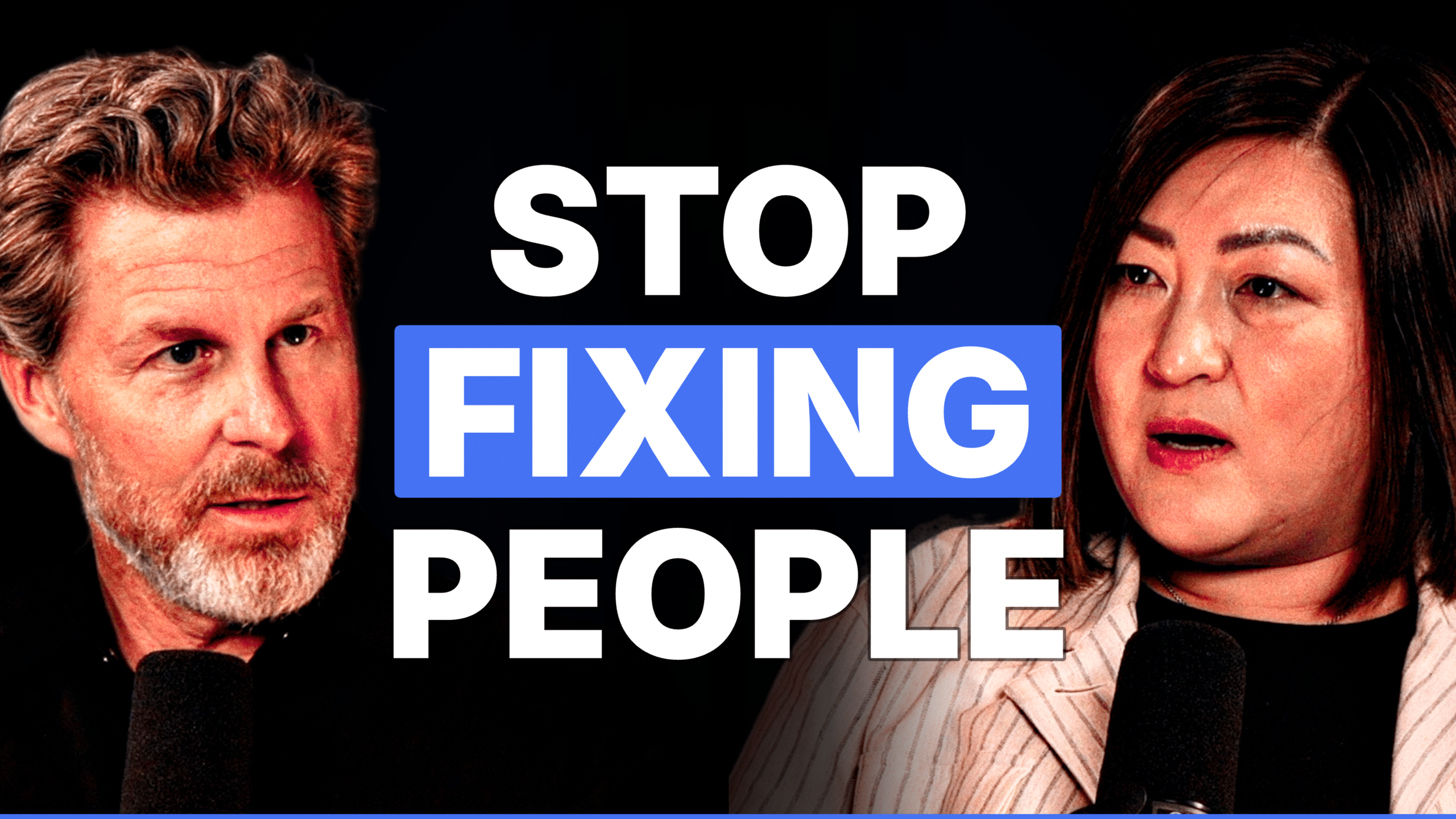
In this episode of In the Arena, Shaun and Steph challenge one of the most common instincts in leadership: the instinct to fix people first.
Because behavior does not happen in a vacuum.
And the thing shaping it may be something leaders have more control over than they realize.
🎧 Be sure to follow this podcast wherever you are listening!
▶ Watch the full In the Arena series: In The Arena with DoorTwo Podcast
📬 Get our weekly leadership newsletter: DoorTwo Leadership Newsletter
🏢 Learn more about DoorTwo and our work: DoorTwo.com
Chapters
0:00 Intro: leaders bring the “weather”
0:40 Behavior = Person × Environment (the 94/6 rule)
2:49 Why the room shifts when a leader walks in
3:47 “But I’m the same everywhere” — the church test
6:19 How environment and behavior feed each other
7:51 You ARE the environment for your team
8:29 The weather you bring home
10:43 Presence: autopilot vs. on purpose
12:08 How to read the room (the “open-door” leader story)
15:06 Designing environments on purpose
17:48 Content vs. process: running better meetings
20:47 This isn’t about being “nice” — and does it affect results?
24:49 The 24th-floor experiment & owning your presence
28:07 Two doorways: fix the person or change the environment
31:39 Lazy leadership, the 1% shift & where to start
34:53 Wrap-up
Steph 00:00
94% of the issue is the systems, the environment, not the person. 6% is the person. So what are we doing here?
Shaun 00:09
B equals P times E.
Steph 00:12
Behavior is a function of the person times their environment. And if you’re a leader by any definition, you already opted in.
Shaun 00:21
They are a bad human.
Steph 00:23
Presence is presence. It’s what type of presence are you bringing for the people around you?
Shaun 00:27
Are we asserting that the environment we create affects results?
Steph 00:32
Absolutely. Because you won’t get to creativity if you don’t feel safe.
Shaun 00:40
Welcome to In the Arena. My name is Shaun Dyke, managing partner here at Door 2. So there’s a truth that we know — we all fall victim to this. As leaders, teachers, parents, spouses, we often try to shape and judge the behavior of those around us, and we mostly try to do that through influencing the person or the personality. But there’s an element in this that we often forget about: how the environment is affecting who that person is. I’m fortunate to get to sit across from Steph here today. Steph, tee up that construct in any way you want to.
Steph 01:17
I don’t think there are many meetings or facilitation sessions we have where we don’t share one of our favorite formulas, which is B equals P times E. Behavior is a function of the person — the individual themselves — times their environment. So what you’re saying is we try to course-correct the behavior by addressing the individual and their behavior, and we miss a large portion of the environment, the conditions that we create in order to invite the best in people. I was just with a manufacturing organization this week, and they know Deming very well.
Shaun 02:00
Deming — which, for those that may not know…
Steph 02:03
The father of operational excellence. They were talking about talent and the lack of it, and they went down this path of “people, people, people, people.” And I said, “Hey, 94/6.” And they looked at me. It’s like: 94% of the issue is the systems, the environment, not the person. 6% is the person. So what are we doing here? How many of us are parents where you teach them things — you say, “Hey, mind your manners” — and at home they’re like “wah,” they do whatever, and then they go to your neighbor’s home and they’re the best child.
Shaun 02:45
And the parents are like, “Your kids are so well-behaved.” And in my inside space I’m like, “Did you drug them? Because they are not well-behaved. They are monsters.”
Steph 02:49
That’s the E. That’s the environment. And that shifts at times. When we get to observe teams — you sit and watch, and the room is chatty, they’re talking to each other, checking in, laughing, and then the leader walks in, and all of a sudden everybody inhales, you see them hold their breath, everybody sits up more straight, and the fun is deflated and out of the room. And the leader has no clue. They just walk in, sit down, take their space, and go about their day. Or sometimes you’re in a room where everyone is quiet, no one’s saying anything, and the leader walks in and they’re like, “Oh my gosh,” they exhale and they’re like, “Oh, so nice to see you.” Now we’re in. So the leader brings, we say, the weather. Sometimes it’s stormy or cloudy, or you bring sunshine — and that informs the behavior you’re going to get from your team.
Shaun 03:47
Let’s go back to Kurt Lewin’s famous formula here. Behavior equals the person times the environment. So the assertion we’re making is: when we look at somebody’s behavior and we see the things they’re doing, we’re saying that’s a combination of who that individual is and the space we put them in. So what we’re trying to get people to trust and believe is that you, as an individual, will change your behavior in different environments. For the individual who says, “That’s not true, I’m me all the time,” how would you guide that to help them see the difference?
Steph 04:23
I’m going to quote you. You’re the one who has said this in rooms — you said, “Hey, if we stubbed our toe in church, we probably won’t say some words that by default we might say. But if we stubbed our toe elsewhere — outside in the park, in the parking lot — probably some words would come out that would be different.” It’s the environment. It’s the E. You’ve got to think about it: before you walk into a meeting, you’re like, “Oh gosh, who’s in that meeting? Now I’m going to have to show up differently. I’m going to posture differently.” Or, “Oh, this meeting’s going to be super cool, the vibe is going to be different.” And that’s often unconscious. So leaders, when you bring presence — autopilot presence or intentional presence — it’s a leverage for performance. People don’t rise to your words. They actually follow your behavior and your temperament and the weather that you bring. We often say, too, if you hear negative news, it’s how you present it to the group. You can bring the weather of, “Ugh, this sucks. It was not my choice, but here we go, we’ve got to do this.”
Shaun 05:37
“Corporate’s telling us.”
Steph 05:39
“Above my pay grade.” We’ve all heard that. And then — how is the E that you’re creating? The people are going to feel, “Yeah, this sucks. Now I have to go out and do things I don’t want to do. Now I feel worse,” because they look to you for the temperature check. Or you come in and go, “Hey, we’re going to have to do some hard things right now. It’s not easy, I get it. I believe in the team. We can do it.” And be realistic — not way too optimistic, where they’re doubtful, but authentic. You bring the tone for people. People will follow tone and temperament faster than strategy, because it’s the energy they see right then and there.
Shaun 06:19
The environment affects behavior, and behavior affects environment. So these things bounce back and forth. So I’m in Nashville last week with my wife. We’re at an optometry conference, and I’m not that much of a wallflower — those of us who know me… I tend to be a little more out there, a little louder, a little in my space, a little have-fun-with-it. And as we walked up to this optometry conference meeting, I turned to Kathleen and I said, “What are my rules?” And what I was asking is, what is the E here? What is this environment? Because do I need to tone it down a little bit? Do I need to drop in a little more professional polish, Shaun, or can I be a little more like windsock Shaun, where I’m waving all over the place and a little bit wilder? In that space, I wanted to know how I needed to adjust my behavior because of the environment. I didn’t want to come in there and embarrass her or be strange. And by the way, it was fun. It was a good time. Was it less than I would usually bring? Yeah. So I had to dial that back a little bit. I didn’t need to be as wildly crazy in it. As the evening went on, my inhibition maybe got less, and so my behavior probably got a little more exaggerated, which in turn affects the small population around me. So fair to say there’s a pretty pronounced interplay between the environment’s effect on people and people’s effect on the environment.
Steph 07:51
Yes. And when we work with leaders, we say, “You are the E for your team.” So when you come into the room, do people lean back or lean forward? Do they inhale or exhale? And we talk about feedback — it’s in their faces if you just watch. When you enter the room, they’re giving you feedback all day long. Are they smiling? Are they artificially smiling? Do they genuinely want to give you a hug? Or are they just like, “Ooh, I’ve got to stiffen up now”? That’s feedback to you, and I don’t know if many leaders pay attention to that feedback.
Shaun 08:29
When you and I do, like, 360 work, one of the most foundational questions we ask is, what is the impact that leader has on a room? So we’re asking your direct reports, “What is the impact you have on a room?” Here would be a fun one, wouldn’t it — let’s ask our children. What is the impact Dad has on a room when he comes home? Is Dad in a good mood? Is Dad in a bad mood? What’s his tone and temperament when he walks in that room, and what do we create in those around us? It’s the same reality. You said it earlier — we bring weather. Do you know what weather you’re bringing into those situations?
Steph 09:08
And the children, if there are multiple, would say, “Oh, is this going to be a good day or a bad day with Dad or Mom?” And let’s watch, because then we have to be different. That’s the environment you get to bring home. If Dad or Mom had a tough day at work — oof, we’re in for it. Or if Dad or Mom had a great day at work — okay, we’re safe.
Shaun 09:26
This sends echoes through me every time. When we talk about it — any conversation — I think about people listening, and my ask of them in this moment is to ask yourself that question: Do you know the weather you bring? Are you conscious of the weather you bring? Do you roll into spaces with enthusiasm? Do you bring sunshine, or do you bring rain? Do people want you in the room because you brighten it, you bring warmth, you bring focus? And by the way, that doesn’t mean that’s what you need to bring all the time. The expectation isn’t that you’re always this sunny demeanor. Sometimes you might need to bring the rain — that’s different in how you approach it. But are we intentional about the effect we’re trying to have on the environment through our behavior? North of 70% of the time, people are unconscious of how they’re affecting the room around them. And the worst part — even worse at home, because people just let that down. They walk in the room and let their stresses fly, whatever those pieces are. So my hope is, if you’re driving in a car or sitting at your desk listening to this, ask yourself that question: Do you know the impact you have on an environment?
Steph 10:43
And if you’re a leader by any definition — a parent, a spouse, the president of a company — you already opted in. Presence is presence. You cannot not have presence. It’s what type of presence are you bringing today, tomorrow, this week, this year, for the people around you. I remember sitting in a meeting where this leader has what we call a hurry-up driver, where the agenda is, you know, 8:00 to 9:00 this, 9:00 to 10:00 that, and people are talking and he’s rushing the conversation. You could just feel it in his body. He’s tapping his pen on the desk, or he’s cutting people off in conversations. He’s just got a lot of energy that’s…
Shaun 11:31
This vibrating angst that’s happening.
Steph 11:33
You just feel it. And so people feel rushed. They feel like they have to talk really fast in their section, and they’re just speeding through things. So that’s the E that’s created with that team — versus a leader who walks in the room calm, collected, allowing space for conversations to occur naturally and organically. That’s a fundamentally different environment that we experience.
Shaun 11:59
So how does someone increase their awareness of the weather they’re bringing?
Steph 12:08
The one thing I said earlier is the tell: you watch the room. People are giving you feedback all the time. So if they’re rushing to say something to you, or apologizing to interrupt you, probably it’s not as safe to be around you. If people are standing up, warming up, leaning in, embracing you with a hug, you’re probably bringing good, welcoming presence. Sometimes that’s good, sometimes that’s not — it just depends, because when you over-rotate on the niceness, then people may not deal with conflict very well. So take inventory. Watch the room when you announce something or when you’re speaking. Are people leaning in? Are they cringing? Are they doing internal eye rolls? Or are they actually super excited? That can inform you of the weather you’re bringing. And you can ask yourself, “What did I do today? How did my presence help — or hurt — an individual today? And how do I know?” Because they’ll wear it on their face.
Shaun 13:16
We’ve said this many times: imagine if you could have a drone follow you around all day and observe your behavior, and then at the end of the day, watch game tape. What happened to someone when you walked away? Were they taller? Were they smaller? Did you see them drop? Did you see them cower? What did you do? Because we affect people with every interaction we have. We always say every interaction is either relationship-building or relationship-separating, with your behavior and how you’re bringing that presence. And boy, that is just a damn moment. I think about how often someone on our team will stop by my office and say, “Hey, sorry, I just need a minute.” They’re phrasing it that way because they’re conscious that I’m probably harried or hurried in that moment — which is not something I want to radiate, but I do. Whenever you’re not conscious of what you’re showing up with — if you listen to what’s coming at you, as you said, you’re getting feedback all the time. Now, you can explicitly ask for feedback as well, right?
Steph 14:21
That reminds me of an owner. He called me in and said, “Can you go interview people about my president? I’m getting feedback that he’s not available to people.” And he says, “What are you talking about? I have an open-door policy. My door’s always open. I’m available to people. I’m not understanding this.” So as I start talking to people, they said this individual would say, “Okay, yeah, I want to talk to you — walk with me.” And just the pacing and the tone, as you can hear… He’s walking really quickly, and this person’s walking with him to his office. He gets into his office, sits in his seat, and goes, “Keep talking, I can multitask.” He’s checking his email, and this person’s trying to catch him on the side because his desk is facing the other way, and he’s like, “Uh-huh, yeah, I hear you. My door’s always open. I’m super available.”
Shaun 15:06
Sure — and completely disengaged from you. You know, it’s funny — Steph, you didn’t compliment me on my Western-wear shirt that I’m rocking.
Steph 15:17
Did you buy that last week?
Shaun 15:17
I did. This is from one of our clients, as you know — Kendra Scott. They have a store called Yellow Rose. It has a lot of incredible stuff in it. When you walk into one of their stores, the intentionality they put into every single detail — from art, to wallpaper, to ceiling features, to the way they style a mannequin — it’s all to the nth degree. In fact, the Nashville Yellow Rose has a bar in it. Now, we all know I’m a fan of cocktails and a bar. Many of us are. But it is absolutely elevated, because they have a really attuned awareness to what this environment will do. Will you feel like you can relax into it, settle into it, be part of it? Or do you feel rushed to get out of it? A fast-food restaurant — very different environment, with intentional creation. The seats are uncomfortable, so you get your butt out of there and move on so somebody else comes in. So the intentionality in environment creation, and the effect it has on people — I don’t think it’s an understatement to say most leaders, parents, spouses don’t focus on the environment to shape and affect behavior. They focus on the person, which is a significant miss. In the world we get to work in, it’s referred to as fundamental attribution error: when you attribute behavior to something fundamentally inaccurate, focusing it solely on the makeup of the person. A great example was a line I read in a book by Chip and Dan Heath called Switch. They said, if you’re driving in traffic and you cut someone off — well, you were just busy, or in a hurry, it’s fine. But if somebody else cuts you off, well, they’re an asshole. Fundamentally, they’re a bad human. Not “they were in a hurry,” not “they were late to work” — they are a bad human. We honk; somebody flips them off. Some of our colleagues might — we would never do that. But it’s the attribution of a behavior to the individual, the P in our equation, not the E. So what do you say to the leader, or the spouse, or the parent, when we want to ask them to take a broader look beyond the P in that equation — the person — to the environment? How do they start that?
Steph 17:48
I would say you link it to how you run your meetings. Part of psychological safety — the measurement of it — is that people share the airwaves. So are you speaking 80% of the time, or are you allowing people to share with you? That’s one way, because you’re bringing the E. And if you’re doing a lot of the talking, what are you learning? Because you’ve got to get your people to own the goals and their roles. If you’re just telling, then probably the environment is “I say, you do,” versus allowing them to solve for the problems at the table — because that’s why you hired them. We often teach: instead of telling, ask questions. Coach and guide. If you’re doing more telling than asking, that means you’re not inviting thinking to the table — it’s probably not the environment you’re creating. We say people over-index on the content and don’t focus on the process of how things are happening in the room. Because environment is also set by what you tolerate and what you model. So if you’re allowing people to cut each other off and be rude, that is the environment you’re creating for your team. And if you’re taking inventory and you say, “Yeah, I actually let that slide a bit,” then course-correct that if you want to change your environment.
Shaun 19:16
I want to punch that one more time, because I think it’s such a powerful thing — content and process. In a meeting context in our business, the content is the information we’re sharing and what we’re going through. The process is the manner in which we’re conveying that information. Are we soliciting input and feedback? Are we capitalizing on the collective intellect of the people we pay and we hired? Or are we just dominating and pushing our own self-interest and opinion, guiding it through? That’s all process — which technically is all of what we do. Our focus is on helping them process the content more effectively to get to an outcome you want to get to.
Steph 19:55
Or people see it, they just don’t stop to slow down because they’re hurrying up, or they’re trying to stick to an agenda…
Shaun 20:02
Next thing, next thing.
Steph 20:03
…which is when they announce something and somebody looks perplexed. Well, that’s process. You’ve got to go, “Oh, I can see your wheels turning. Can you share with the group what you’re thinking?” Because you may miss a good nugget there, since you’re just going to move forward with the content itself. And when we point that out, people tend to tell us, “Yeah, we noticed that. Nobody wants to say anything.” All the time. Someone’s frustrated over there. I see him or her frustrated, but I’m not going to say anything because we’re focused on the content. The process is — ooh, you probably want their buy-in. They’re sitting at the table for a reason. Can we slow it down and say, “Ooh, looks like you’re stuck on something maybe. You want to share?” Let’s talk through that.
Shaun 20:47
And the relationship in that, as you said, means that as a leader we’ve created an environment that avoids the hard conversations. We tolerate it and we model it. So through our actions, we’ve likely — unintentionally, it’s not out of malice normally — created an environment where we’re going to naturally under-leverage the capabilities of our team. Which is actually a great point, because I want to clarify something. If you’re sitting out there listening to this, what I don’t want you hearing is, “Wait, Shaun and Steph, you’re saying I just need to be nice and create a nice, comfortable environment for people? Is that what we’re saying?”
Steph 21:36
Oh, absolutely not. We’re saying — gosh, you can disagree. You can do it respectfully, and you can do it in a way that’s additive to the conversation. And that’s on you. Do you invite it? If you’re saying, “We want a team that accepts feedback,” are you seeking it as a leader? Do you often say, “Hey, can you give me some feedback?” Oftentimes we work with leaders and they say, “Go fix my team. I’m good.”
Shaun 22:03
We do hear that.
Steph 22:04
Then we could probably deduce they’re not great at seeking feedback. Probably their team’s not going to give it to them directly, if that’s how you’re modeling it. And that’s the environment: okay, we can talk about the leader amongst each other, but probably not to the leader themselves.
Shaun 22:22
So what do we say to the person who says, “Okay, cool, I get this. I get that how I show up as a leader has an effect on the room. If I come in angry or frustrated, the room’s not going to be as open to me. If I come in excited, that’s fine. So why do I care? I’m just trying to get a job done. I’m trying to get results.” Are we asserting that the environment we create affects results?
Steph 22:48
Absolutely, it affects results. Because you won’t get to creativity if you don’t feel safe. And you won’t get feedback — if you want a growth mindset, right? You won’t get feedback to adjust. People won’t give it to each other if you’re not modeling it, which means we won’t learn and fail forward fast — which is what we often say. Organizations that learn faster than their competition beat their competition. But if you’re not inviting it, then absolutely it will impact performance.
Shaun 23:21
The most powerful way to affect business performance is by creating an environment that’s optimized for people to show up. And how do you do that? Through your leadership behavior. So your behavior as a leader creates conditions that are going to enable customer-promise delivery — or disable it, or slow it down, or bog it down, or make it more ineffective. In our work, what I think we focus on a ton is realizing, as a leader, the importance of becoming conscious of the effect you’re having on the room and your house — what implications you’re cascading from what you’re trying to get out of something.
Steph 24:02
Parents — your children: who do they go to, Mom or Dad, with the bad news? Because that tells you the other parent is not the person they want to go to — probably doesn’t create the safe environment. Same thing with leadership. If they hide bad news from you and you’re surprised, that’s feedback that you’re probably not inviting safety and input, and making a lot of decisions potentially in the dark. That’s how you tell. If you don’t get direct feedback, you can also see it in the behavior — when you’re in the room, out of the room, the conditions you create. Because that absolutely impacts performance at the end of the day.
Shaun 24:49
This is years ago — I was teaching a class, and I was having a conversation about this general topic, that the environment has a pretty prolific effect on people. What’s interesting is that sometimes people resist that, because they want to believe they are themselves, who they are, regardless of the spaces they go into. So I did this really comical thing. I was working in an organization that had a 24-floor ivory tower. We’re down on, I think, the fourth floor — the training floor. There was this disagreement around whether it really mattered or not. The top floor, the 24th floor, was the executive floor — that’s where multiple executives sat, where the executive conference rooms were. It was really nice. It’s cool up there. So I said, “Hey, let’s do a field trip.” I put the team in the elevator, we take a ride up to the top, and even as we get out of the elevator, everybody is tight-lipped, no noise, whisper-quiet when they’re walking. We all walk into the conference room. They pull out their chairs quietly. They all sit down pretty poised. And I said, “How’s it feel?” There was no need to make the point any further. They all 100% went, “Okay. I get it.” You change how you show up based on the environment you’re in. That is an incredible reality. Because as a leader, what do you have more control over — shaping the environment, or changing the person?
Steph 26:27
Shaping the environment. We often want to turn it on changing the person. It’s really shaping the environment. You own that. You own your presence. You bring that every day, whether you like it or not. It goes back to — remember when you and I walked into a client system? Before we even got there, we were like, “Oh, I think we have to dust off our suits,” because I don’t even know if we wear those anymore. And we’ve got to put them on. Everybody’s in a tie, and you and I were at our buttoned-up selves, because that was the environment we walked into. And then, do you remember when we went to a different offsite, and you’re like, “Hey, it’s so cool when the president comes up to you with a beer in his skiing outfit and we’re at a resort”? That’s a different vibe, wasn’t it? Different environment. We got stuff done in that environment. People shot straight. They were actually themselves, and they were more creative, more playful, and they owned their stuff. The other environment felt more stuffy. I think we were trying to talk about engagement, and their engagement level was low, and they were wondering why — and rewards was not high. Part of the environment they’re creating.
Shaun 27:40
And it’s funny too, isn’t it? I remember in that situation the intentionality was to maintain an air of professionalism — they wanted it to be competency-focused and serious. A lot of that was present, but it was also just void of humanity. It was stark and quiet. And yeah, I did not do well in that space for very long.
Steph 27:58
And I don’t think jokes were accepted.
Shaun 28:03
No, they weren’t.
Steph 28:05
So we were like, “Okay, can I tell a joke?”
Shaun 28:07
So I have a colleague that I coach, and she — they got acquired by somebody. They were a startup, a software startup, so a lot of fun, playfulness, had a good time. So they get acquired by this new group. The head of HR is sitting in with the new leadership team, and they’re talking about the rules of the road and how they operate. They said, “Do you have any questions?” And she says, “What do you all do for fun?” And the answer was, “We absolutely encourage fun outside of work. We get things done here. That is what we do.” Those are true spaces. And at times some people actually like those spots and thrive in them. This is what we mean by intentionally curating the environment you need to create. Sometimes when you and I are holding a meeting here, that meeting needs to be more serious and focused around what we’re doing, and we try to show up that way.
Steph 28:58
When is that?
Shaun 28:59
It’s uncommon. I’m not invited to those usually.
Steph 29:04
Are they on our calendars or something? I don’t know.
Shaun 29:05
You’re not either. And then sometimes it’s more affiliation-based and fun, and we get to bring a different tone to that. I think our biggest piece of advice inside of this episode is: as you look at spouse, employee, parent, teacher, friend — if you’re in a spot where you’re trying to influence their behavior, you can go through the doorway of the person, or you can go through the doorway of the environment. Most of the time we forget to leverage the doorway of the environment, where we have so much more effect and control, at such a higher level — and in turn, how that translates into true performance, outcomes, or business results that we want.
Steph 29:53
And that links to presence, doesn’t it? We coach leaders on executive presence all the time. I have an example right now. There’s a beloved leader — she brings presence. She knows everybody’s names.
Shaun 30:05
I already know who you’re talking about. I know her.
Steph 30:09
I walk into the executive meeting, and they make fun of the CFO because he’s so serious — and when he cracks a joke, they snap. They do that.
Shaun 30:15
Because he cracked a joke.
Steph 30:17
And so it became the thing. He was trying to crack more jokes so he could get more snaps — and they get work done.
Shaun 30:23
And by the way, this is an executive team of a multi-billion-dollar business. This is not some fly-by-night company. It’s a very, very successful business.
Steph 30:29
And she’s like, “Hey guys, after our meeting we’re going to go to a bar. I wouldn’t use the bathrooms or touch the tables, but they have really good wings and beer.” And they all know where that is, and it’s become tradition, so they can laugh and joke and get to know each other — which is a very important part of a team. So she brings that type of presence. Well, she’s leaving, and now this new leader — his presence is very different. And it’s not wrong, it’s just drastically different. He’s more stoic. He’s going to be more structured. So my job is to ready this leadership team: hey, your beloved leader who was playful and fun got stuff done — he’s also going to get stuff done, it’s just he’s going to be more reserved. And then when I work with him, I’m going to say, “Hey, just so you know, you may want to dial up your presence on warmth, because you’re not going to be her. At the same time, you could probably benefit from a little bit more of that — and not just come through the head all the time without the heart.” Because she was all — she was head and heart.
Shaun 31:39
That’s what we say, isn’t it? There are an infinite number of ways you can interact and respond to people around you, and most of us default to ones we’ve become comfortable with — or just a bit maybe even lazy. This is aggressive language, but at times I’ll call it lazy leadership, because you just drop into the thing that works for you versus what the people around you need. And it does take effort. It is hard to do that. But the counsel, the encouragement, is a bit at a time. You improve 1% a month, you’re 12% better by the end of the year. That’s a big shift. So if we’re bringing this thing to a close, and we want to leave a message around someone saying, “Okay, I hear it. How I show up affects the environment, and the environment has a pretty prolific effect on the people around me. So I’d really like to change — or influence — the way my children, my spouse, my parents, my employees show up.” What would you have them do? What do you have them begin with?
Steph 32:51
Pick one of those. If you say — let’s go to parenting — “Gosh, I want my kid to come home excited about sharing their day with me, and they’re not right now.” Okay. Let me pay attention to my mannerisms when they walk through the door, or when I walk through the door.
Shaun 33:08
My intentionality with them.
Steph 33:10
Am I hurried and rushing, going straight to the room? Or do I actually process? The process part is — if they’re shorter than you, you bend over, you lean in, and you say, “Hey buddy, how was your day?” Go in with a hug. Or you say, “How was your day? Did you do your homework?”
Shaun 33:29
While you’re doing three other things.
Steph 33:30
While you’re doing three other things. Looking at your phone. Trying to make dinner. Looking at your phone. So start there. If you own your presence and the environment you’re creating, the behavior will follow.
Shaun 33:40
And that’s really the same for anything. If you tend to walk into your meetings with an agenda in your head, already racing because you’re two minutes late and you’ve got things going on — we’re going to feel that. So how do you consciously adjust that tone? Sometimes it’s as easy as… I’ll tell teams, “Look, you’ve got 60 minutes in your meeting. I get it. I want you to take five minutes at the beginning, and in those five minutes I want you to thoughtfully and genuinely just slow it down. Honestly ask a real question. Listen to real answers.” You will hear everything about the room change gears — and then hold that gear, because you’re not coming in with that rattled, frantic state of moving quickly and doing all of the things. But you do have to be willing to. Our phrase, “choose extraordinary impact” — it’s a choice. You have to recognize that in my plight to evolve and amplify those around me through influence, I get to start with how I’m showing up. Steph, love hanging out with you.
Steph 34:53
Always fun.
Shaun 34:54
Good time. Look forward to next time. Peace.