

AI has every employee quietly wondering if they’re next.
Certainty is gone. Change is constant. And team confidence is likely at an all time low.
If you’re the leader trying to steady your team and rebuild their confidence, it can be hard to know what the right words are.
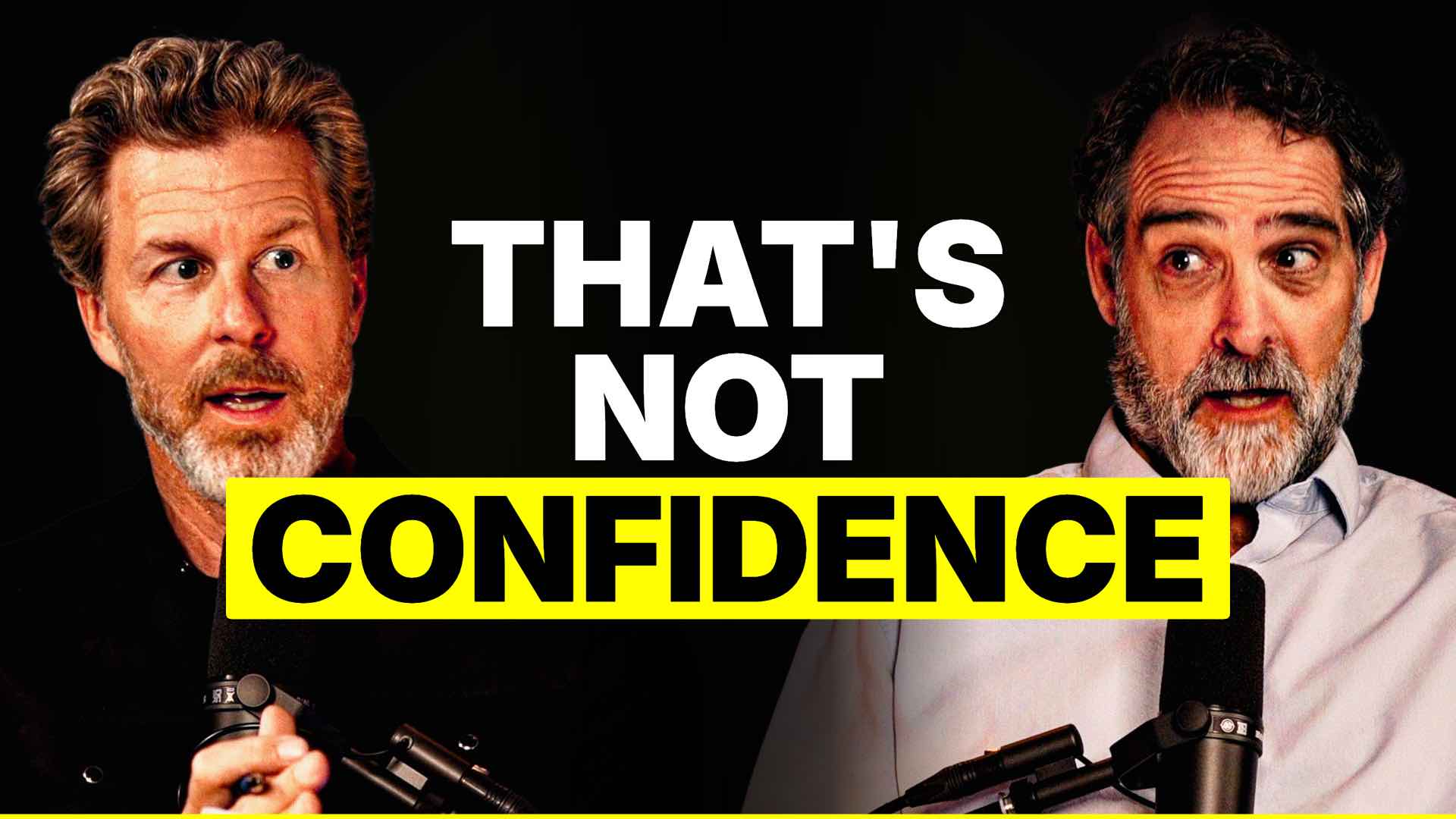
In this episode of In The Arena with DoorTwo, Shaun Dyke sits down with Dr. Jeff Miller to walk through what great leaders actually do when their team’s confidence is on the floor, and why the moves most of us default to (“you’ll be fine,” “we’ve got this,” “just push through”) won’t work.
The first 10 minutes lay down what confidence really is, Albert Bandura’s work on self-efficacy, why confidence drops in seconds and rebuilds in seconds, and why it’s nothing like self-esteem, certainty, or competence.
From minute 12 on, it’s the leader’s playbook itself: what to do in the first hour after a miss, how to debrief without blaming or excusing, the trap of false confidence, and the deceptively simple question that should sit on every leader’s desk:
“Are you going to judge them, or are you going to coach them?”
If you’re leading through an AI shakeup, a layoff aftermath, a client loss, or just a quarter where the wind is in your face, this is the one to send to your peers.
🎧 Be sure to follow this podcast wherever you are listening!
▶ Watch the full In the Arena series: In The Arena with DoorTwo Podcast
📬 Get our weekly leadership newsletter: DoorTwo Leadership Newsletter
00:00 | Shaun:
What is confidence and why does it matter?
00:02 | Jeff:
The key thing to understand when people look at confidence is that it can be dramatically changed more than any of the other what are called self-constructs by immediate action. When people say, “Oh, they’re just not confident,” the key question becomes about what? My favorite example was a CEO when I first started coaching him. But he said, “You know, this is my first CEO job, and I just realized I don’t know what I’m doing.”
00:29 | Shaun:
What I’m doing.
00:30 | Jeff:
And my response to him was, “Fantastic. Now we got something to work on.”
00:34 | Shaun:
Now we begin. Confidence is determined by the memories we choose to remember.
00:41 | Jeff:
Are you gonna judge them, or are you gonna coach them?
00:46 | Shaun:
Welcome to In The Arena. My name is Shaun Dyke, Managing Partner of DoorTwo. So here’s the fun we get to go into today. Anyone that has led a team has been in a spot where they’ve created strategy, they’ve identified role clarity, goal clarity, we’ve set plans in motion, and we’re moving. And then inevitably, something changes. Market shifts, demands change, and there’s a, a ripple that goes through their team where confidence is rattled in the team a bit. Uncertainty is present for the team. And the reality is, likely, as a leader, you know that that’s not the last of it, that there’s more impending change that’s gonna happen. So we have this question in our head that is really, as a leader, how do we help keep confidence high in our teams amidst uncertainty and change? That’s what we’re jumping into today, and we’re jumping into it with Dr., it’s important for this moment, Jeff Miller, who’s got a PhD in a space that chats about this. So Jeff, here’s my opening question: What is confidence, and why does it matter?
01:52 | Jeff:
A huge question. And so I’m gonna start, by probably dipping my toe a little bit more into the psychobabble than most people would want. Just humor me for a moment.
02:02 | Shaun:
Okay, I’m ready.
02:02 | Jeff:
‘Cause the reality is is that the word confidence actually comes really through the lens of something called self-efficacy.
02:08 | Shaun:
Okay.
02:10 | Jeff:
Here’s all you need to know about self-efficacy in a nutshell-
02:12 | Shaun:
Ready
02:12 | Jeff:
… which is, ideated by a man by the name of Albert Bandura, Stanford professor, recognized that when you look at what are called self-constructs, think self-esteem, self-worth, self-concept, those three are conceptually distinct. A lot of people will talk about low self-esteem, for example, and high self-esteem, which by and large does not change very much over your time. Self-concept, slightly different. How do I view myself generally? When we look at something called self-efficacy, it is actually subject-specific internal measures of confidence. So the key thing to understand when people look at confidence, self-efficacy, is that it can be dramatically changed up or down more than any of the other what are called self-constructs by immediate action. So the quick example I’ll give you, I like to play golf. you hit a bad shot. Your confidence in hitting that club, that shot in that moment drops.
03:14 | Shaun:
Dips.
03:15 | Jeff:
Next, next shot, ’cause the ball rolls forward 10 feet, not like that ever happens to me. But then you get the same club, same shot, and you hit a nice shot. Your confidence goes straight up. Your self-esteem’s not hit. Your self-worth is not hit. Your self-concept does not hit, but self-efficacy hits.
03:30 | Shaun:
Confidence.
03:31 | Jeff:
Confidence hits. So you have self-construct of self-efficacy or confidence, which the key thing for leaders to recognize is that it is dramatically impacted by immediate moments more than anything else. So when people say, “Oh, they’re just not confident,” or, “They’re overly confident,” the key question becomes about what?
03:54 | Shaun:
So let’s take that example for a moment. I’m on the course, which I rarely am, and I have some horrific swing and just whiff and almost kill somebody with a ball. I almost did the other day with that. My confidence that dips is… Do I feel it’s specific to my ability to swing a club, or do I feel it just in general? Does it radiate through me beyond that? Like, now all of a sudden if I walk into the club and I’m talking with somebody, is my confidence to have a conversation with them lowered, or does it stay within that specific lane of expertise?
04:26 | Jeff:
Yeah, so it’s actually an interesting idea because there is something called general self-efficacy, which would speak to people have generally high measures of confidence or not. What I want to focus on in our time today, though, is on those moment-by-moment pieces with regards to confidence on specific things.
04:46 | Shaun:
Okay.
04:46 | Jeff:
So take anything. Golf club impacts your confidence in golf, but it’s not gonna impact in any way, shape, or form your confidence in driving your car on the way home or having difficult… Let’s move it to something that a lot of leaders are struggling with, having difficult conversations with your employees. People that have low confidence towards having difficult conversations with their employees, once they’re coached, once they work with somebody to understand how to actually have one… The example I will give you is, is a lane that we get to live in on a regular basis, which is broadcasting intent.
05:20 | Shaun:
Mm-hmm.
05:20 | Jeff:
The first time people walk at that and they’ve never done it before, they’re not taking as many risks. They’re nervous. They want to get this perfect, but once they have the conversation and it goes well, their confidence in having a similar conversation will go up. Similarly, if they whiff at that conversation, confidence drops. So the key piece in the leadership space with the area of confidence is you got to pay attention to what people are doing. So I think that the reality is that when leaders are applying the concepts of confidence, they need to remember that while you will generally have some people that are confident, you will also have people that are trying new things, and their confidence is gonna go up and down. And the key thing that people often forget is that while confidence goes down on failure. Upon success, confidence can m- rise meteorically. It’s one of the reasons why once people do make a mistake, we want them to take another swing at that quickly so they can recognize, “Okay, I can do this,” confidence goes up, and then they’re able to move forward and do different things like take better risks, ask more questions, engage a little bit more deeply. But when our confidence is continuing to go down, we’re not taking risks. We’re not asking questions. We tend to burrow.
06:39 | Shaun:
One of the pieces of feedback we got on our podcast was a good one. Multiple pieces of feedback we got was either, “Hey, you guys either need to talk for three hours, or you need to talk about less things,” ’cause we hit some things that are pretty intense. So the things you just talked through a lot and powerful as I’m processing them. T- take me back one step on something, or nine steps, however we want to lens it. The ideas of self-esteem, self-worth, self-concept, do I need to know those? As a listener, why is it important for me to know those?
07:06 | Jeff:
As a, as a listener, I think that what’s important to know is that there are multiple different ways that we can, if we so choose, look at ourselves, and that as the research has continued to evolve over the last 100 years, we’ve gotten more and more and more narrow in our understanding of how people engage in the world. And so knowing, for example, it was a minor epiphany when I was in graduate school, and I was… and I heard, “Oh, well, self-esteem really doesn’t change much over a long-
07:38 | Shaun:
Mm-hmm
07:38 | Jeff:
… period of time,” that was new information for me.
07:41 | Shaun:
Yeah, it-
07:41 | Jeff:
‘Cause I was thinking, “Wait a minute.”
07:42 | Shaun:
As we process it, yeah.
07:43 | Jeff:
Like, so somebody that has low self-esteem, if they don’t… if they feel better in the moment, their self-esteem is not just going to rise, theoretically not so much. They’ll have a momentary spike, but it’ll tend to regress back towards where it was, whereas with confidence, it is literally dramatically impacted. The other pieces-
08:01 | Shaun:
In the moment
08:02 | Jeff:
… in the moment.
08:02 | Jeff:
I mean, the best example I ever get is, I’ve been in a couple of car accidents, but in minor fender benders. It’s just the best example I’ve got, which is in a minor fender bender, you’re driving in your car, normal beautiful day, sunny on the road. You got the radio going. You got a cup of coffee in one hand. you know, you got your… not your phone in the other hand. We don’t, we- we’re all hands-free.
08:24 | Shaun:
Wow. Wow, wow.
08:25 | Jeff:
But let’s just go old school.
08:26 | Jeff:
And we have phone in one hand. You’re driving. All… I mean, you’ve all driven with your knee, all, all of that fun stuff. Minor… You get rear-ended, and then you pull over, exchange information, do all that fun stuff. But then it’s funny how once we’re about to pull back on the road, most people will think 10 and two, radio off, coffee down-
08:50 | Jeff:
… phone down. They’ll drive about 200 yards, music comes on, coffee cup comes on, and, and we like, we recognize-
08:57 | Shaun:
We drop that guy doing it
08:57 | Jeff:
… I got this. I know what I’m doing. That would be the example of what’s called self-efficacy confidence. It grows just simply by being able to execute things. It speaks the same reason why when we work with leaders and we talk about ensure that people have clarity of goal.
09:13 | Jeff:
Ensure that people know what they’re doing. Repeat the goal over and over and over again so we keep people focused on what they need to focus on. It’s also why when we coach leaders and we tell them that feedback needs to be connected to a goal, it’s so they’re able to recognize their growth in that moment and measure, “Why am I choosing to show up this way rather than this way?” Which is why those few things I mentioned, risk-taking, asking questions, asking for help, dramatically change based on our, what’s called self-efficacy. The piece that Albert Bandura wrote about, which was beautiful, is that really tightly connected to self-efficacy is this concept called agency.
09:54 | Shaun:
Mm-hmm.
09:54 | Jeff:
And so the reality is, is that confidence, self-efficacy, agency, all really intimately related. And so to know self-concept, self-worth, self-esteem, probably helpful. Critical to this? No. What’s critical for people listening to this is recognizing that if your employee, you’re gonna, you’re gonna send them out to do anything, and they whiff, don’t leave them alone. You’ve got to do debrief so they’re able to recognize, “What did I do well? What did I not do well? How do I go back at that to try it again?”
10:26 | Shaun:
Okay.
10:26 | Jeff:
That’s why I tend to think that so many athletes that are really profound at what they do have really, really poor short-term memory. They forget everything immediately. Pitcher gives up a home run, they forget about it and immediately go back to just throw another good pitch. Confidence goes up and down.
10:44 | Shaun:
Are they forgetting about it, or are they more, reinforced in their, the moments that reminded them they are confident and capable? Meaning, is it that I’ve got, you know, 100 times at my at bat was great, and then I missed on one, so I’m fine. Is it forgetting about it, or is it just more resolve in my ability?
11:07 | Jeff:
That’s a great question. I think this could take on so many different potential answers, one of which gets into the what is the role of self-talk? How do you coach yourself in those moments so we’re not, take the athlete, take an employee, we’re not dependent on other people to coach us, but the power of recognizing I just had… I just made a mistake. My confidence is lower. I need to go take another-
11:31 | Shaun:
Sure
11:31 | Jeff:
… swing at that-
11:32 | Jeff:
… because I know I can becomes key.
11:34 | Shaun:
That’s owning agency in that.
11:35 | Jeff:
That’s having agency.
11:36 | Shaun:
Part of where I was tying this back or wanted to tie this back is, you know, we opened this up with recognizing, hey, leader, when, when volatility hits your organization, it will send some tremors through your team, and it can affect their confidence in delivering and executing on the goal. Now, the individuals on the team are gonna have various states of confidence. Some people may naturally have a higher sense of confidence based on their learned history. Some people’s may be lower. Some people… By the way, a lot of these are questions. Some people are more rapidly and readily affected by a disturbance in the force-
12:11 | Jeff:
Mm-hmm
12:11 | Shaun:
… than someone else may be. All of that is fair.
12:15 | Jeff:
All of that is fair. And then let’s enter the concept of what is called a false or fallacious sense of self-efficacy. And so when they go in, they think, “Oh, I can do this,” and they really are not ready. So their confidence i- is, is false. It’s, it’s why, do your best goals are not the ideal goals. It’s why as we are looking at trying to work with people, staying, staying connected becomes immeasurably powerful.
12:44 | Shaun:
Let’s assume I’m a leader. I know I’m going to have a team. First of all, this is an interesting idea in general, because the leader has their own sense of confidence they need to navigate through. But let’s for a moment assume that we have a leader that has a, a, you know, you’re, you’re out… You have a, you have a fairly strong sense of confidence, and you recognize where your head space is around it. I have a team. I have a wave of change that comes through the organization. I see volatility within my team and within individuals’ confidence to execute toward the goal based on whatever the thing that’s changed and come our way, the advent of AI, any element that is sort of hitting me. What do I have at my disposal as a leader to help my team reground in their confidence to deliver on the goal?
13:32 | Jeff:
One of the things that’s important to remember is that one of the challenges that leaders have is that they have often automated or learned the roles of their team so well that they often forget to unpack the skills and tasks and behaviors that people actually need to execute. It’s just called automated expertise. We do things naturally. We forget it. So one of the things that leaders need to be able to do is break down what these tasks and goals are and get down to as granular an area, take the concept of just change.
14:06 | Shaun:
Mm-hmm.
14:07 | Jeff:
The reality is, is that when you’re leading a finance department, engineering department, whatever department through change, there are going to be certain skills and tasks and behaviors that everybody’s going to need to execute on to be successful at what they’re doing. As the leader, do you have an awareness of what those things are? You know, Ken Blanchard’s work on Situational Leadership did a really interesting, nice job at addressing this by looking at the reality that you have individuals that approach things based on task or goal. So we have different levels of experience with that, but what the Situational Leadership Model does not touch on is that confidence is really tightly connected into this. And so for leaders that are leading through change, part of it is remembering, are you able to then coach at a level lower than you operate to identify where people are specifically missing so you can close that gap with them? Now, if you have been disconnected from the team and you’re unaware of some of those basic things, this is one of the, the, the skills that a lot of leaders will engage in, which is co-building what those skills and tasks, behaviors, and attitudes are with their employee so then they’re able to take a look at where does the employee see themselves, where does the leader see themselves.
15:24 | Shaun:
Mm-hmm.
15:24 | Jeff:
And so as long as we’re not really in, you know, sort of placating and bringing forward false senses of efficacy-
15:31 | Jeff:
… by accepting whatever answer our team gives us, now we’re able to start rebuilding confidence. So one of the mistakes I see a lot of leaders, coaches, teachers do is they literally will say things like, “No, you’ll be okay. You’ll be fine. It’s just a mistake.” The reality is if somebody is sort of in that space where they’re feeling a little gun-shy about leaning into something again, they need someone to help guide them to go in and actually take that next swing to then help rebuild that confidence. And so it seems really obvious, but the reality is a lot of people just walk right by that.
16:06 | Shaun:
Okay, so let’s, let’s hit two spaces you talked about, one of them being, which I think to me is a phenomenal place to be in if I’m being purposeful, planful, intentional, and thoughtful about staying close to and understanding skills, capabilities, mindsets that my team needs to have and how I ensure that that’s… I’m staying abreast of that and working within that. Let’s assume I’ve whiffed a bit, and I haven’t done that. I haven’t really maintained that, and all of a sudden, my team, we were planning on hitting a number, executing on something, and a large client dropped out. They changed their plan. We lost the contract. We are now… Man, we’re in a spot where, whoa, I don’t know that we’re going to get there, and I see this confidence waiver happen in my team. What am I doing with that?
16:54 | Jeff:
I think there’s a couple things at play here. One is, am I confident that I can achieve a goal? If the goal is too large, then what we’re not really looking at is did you do something that impacted your confidence? So if we’re looking at… I mean, a perfect world, people are not only debriefing how they did, but they’re pre-briefing what they need to do. It’s kind of like the work that you and I have both done with organizations. When we’re looking at concepts like how likely are you to succeed-
17:23 | Jeff:
… how likely are you to fail, then let’s unpack that. So a lot of this has a, a social contract with the employee and the leader that the employee’s going to be open, honest, candid, and transparent with the leader-
17:34 | Shaun:
Sure
17:35 | Jeff:
… and that the leader is going to reciprocate by where they’re not there, they’re actually going to call it out. So I think a lot of this is really staying in tune with where the employee’s head space actually is and then not placating and letting them think, “No, you’re fine,” but pushing, and I find that’s a really challenging space for a lot of leaders right now, a lot of employees as well. You know, we mentioned briefly, like, the concept of, of AI, and AI fundamentally is impacting people’s risk-taking and willingness to engage in work because a lot of people are worried, “If I’m working, am I working my way out of a job?”
18:11 | Shaun:
Right. Right.
18:12 | Jeff:
That’s not necessarily hitting this concept of confidence.
18:16 | Shaun:
Sure. Sure. So, let me give you an example, and then, tell me if I’m wrong…. on sort of some of the counsel that I gave. had an individual, he, he and his team are working toward an outcome. They are, they have a large client that they’re planning on winning a billion-dollar deal on. It was a giant piece, aerospace world. And, they missed. They didn’t get it. And it rocked the team on, “Oh, man, what did we do? Where did we go wrong? What happened? Was it us? Was it the client?” Part of the counsel that I initially gave them was num- number one, we need to create space to have that dialogue. So let’s do that to begin with. And in the early stages, it’s create the space and allow, as we say, talk until the talking starts.
19:08 | Jeff:
Mm-hmm.
19:08 | Shaun:
Part of the approach I asked him to go through was allow the team to work through where did they do things accurately and effectively, things they could control. Where did they do things ineffectively, things that they would control? What contributed to the miss? What existed outside of their ability? In truth, this whole miss, th- they would not, they couldn’t have… Nothing they could have done would have influenced or controlled a different outcome. It ultimately, they realized, was completely outside of their scope of ability. They chose a different vendor for a reason that they had no ability to affect. And as they went through the day and they realized that, you saw a different shift in their belief in self and the team. They came back to the table with a sense of confidence, realizing that this was outside of our control, but we had to create the space for an ample amount of discussion for them to realize that. Good counsel-
20:02 | Jeff:
Ooh
20:02 | Shaun:
… as far as directionally allowing an individual to process through and a team to process through, “Man, we whiffed.” I don’t want you working in the organization thinking that the fault lies squarely with you, unless it did. If it did, then we need to tend to that. But in this scenario, it did not.
I think that a couple of things. One is great counsel, because part of it… One of the things that we talk about all the time is debriefs. The presence of the word “I” in debriefs is, is massive. And so I think part of this is letting people recognize, what do I need to do differently next time? Now, if confidence, for example, was impacted, key question is where? Because without getting way too into the weeds, I was doing some work with a sales leader back at my last company, and one of the things that we really looked at was where in the sales process did things go sideways? And so, for example, same company, one of the things that I learned through that conversation was the number one reason why they were losing business was no decision.
21:10 | Shaun:
Hmm.
21:10 | Jeff:
And so the reality is, is that they were not losing business to a competitor, so it wasn’t their, wasn’t their close. It was literally a budget. They just did not make a decision. And so part of this, is, is that going to affect the confidence? Well, if you’re able to unpack literally where did you… What would you potentially do differently? What did you do that was maybe timid, hesitant? Then you’re able to pivot it next time. Now, theoretically, you pivot that next time, you close the deal. This concept called self-efficacy-
21:41 | Shaun:
Goes up
21:41 | Jeff:
… skyrockets.
21:42 | Shaun:
Right. Right, right, right. So do you, do you ascribe to, and how do you think this is in the, the space of confidence, I tend to find that, we all graduate from the University of MSU, Making Stuff Up. And when you’re in a spot where you don’t know, to your point, post-mortem type work, when I don’t know what contributed to it, when a team is left guessing, my experience is that has one of the most prolific effects on confidence. Because I don’t know, did we do it? What should I have done differently? Was it my miss? Where did we not think of two months ago? Or was this outside of our control? So that, that space on what I can control, what I can influence, and what I can’t control, I want teams whenever they’re feeling a confidence waiver to work through that, to get knowledge in our change cycle work, understanding, seeking valid and accurate information to allow you to move through that. Y- How… I mean, in my experience, that has a pretty significant impact, impact on getting our confidence restored. Is that fair in your world?
22:49 | Jeff:
I think it is fair. I think that the reality is, is that through conversation, and whether it’s a no decision or whether it’s we just lost the deal, we don’t know why, I think part of this is getting into the curiosity of trying to understand where I can take even 1% accountability. Where I get concerned about any debrief is where people say, “There was nothing that we could have done differently.”
23:14 | Shaun:
Sure.
23:15 | Jeff:
And I think-
23:15 | Jeff:
… well, and that becomes-
23:16 | Shaun:
Too extreme
23:17 | Jeff:
… too extreme.
23:17 | Shaun:
Yep.
23:17 | Jeff:
And that’s where the conversation gets into, okay, like, where, where did you not show up optimized?
23:24 | Jeff:
General question, why? I don’t know. And then, I mean, I’ve heard you ask this question to people before. If you did know-
23:31 | Jeff:
… where would it be? And magically, an answer comes out.
23:33 | Shaun:
Yep.
23:34 | Jeff:
And so I think part of this is that w- what a lot of leaders often fail to recognize is that it’s not just knowing your employee. It’s really being able to create an environment where people are honestly able to say, like, “I, I just don’t know X, Y, or Z.” My favorite example was a CEO when I first started coaching him. it was a couple of months in, and, and he, and we jumped on the phone. He just did not look like he was-
24:03 | Shaun:
In it
24:04 | Jeff:
… 100% there.
24:05 | Shaun:
Yeah, yeah.
24:05 | Jeff:
And I said, “You good?” And I’m gonna… I’ll, I’ll, I’ll sugarcoat the language a little bit, ’cause it was a wee bit more colorful. But he said, “You know, this is my first CEO job, and I just realized I don’t know what I’m doing.”
24:17 | Shaun:
What I’m doing.
24:18 | Jeff:
And my response to him was, “Fantastic.”
24:21 | Jeff:
And he said, “Why?” I go, “Now we got something to work on.”
24:23 | Shaun:
Now we begin, yep.
24:25 | Jeff:
Why? And then part of as we started to go through and highlight the key areas in his role where he was feeling like he had this wonderful thing that I have now come to understand everybody has called imposter syndrome. So let’s unpack that a little bit. And then as you start to understand and have deeper conversations with people, you will generally identify multiple areas where people are struggling with their confidence. It can be general confidence, but in the world that I like to live in, it’s trying to figure out specifically so we can go take another swing at that.
25:03 | Jeff:
A great example, a family member went through a job interview recently, did not get the job. Confidence shot. They had another job interview. And so to the key piece in that just quick reframe, in a 15-minute conversation was, “What is your goal tomorrow in this next interview?” Per- person was slightly catastrophizing. “I don’t know. I can’t do this. I thought I had this job in the bag.” All of the general pieces.
25:30 | Shaun:
Sure.
25:31 | Jeff:
Let’s set a short, achievable goal, and go in and build it around something that you know that you can execute against. Go in, does it, debrief, thing went much better. It’s just that flow in the process and remembering that it’s… Confidence is going up and down. Like, it’s changing moment by moment depending on what it is that you’re doing. We have… And it’s always like that roommate in our head that is telling us, “You got this. You don’t have this.”
25:59 | Shaun:
Right. Right. Our colleague, Chris, that oftentimes hangs out on here with us, interviewed, a guy that wrote a book called The Confident Mind, and there was a line in that that Chris shared with me, I hope I get it right, that was that confidence is determined by the memories we choose to remember. So I think what’s wildly accurate about that is how we can fixate and focus on failures versus successes, and the tendency that has to affect our future focus on our confidence. Is that self-worth? Is that self-efficacy? Linked?
26:48 | Jeff:
It’s, it’s all gonna be linked.
26:50 | Jeff:
I love the concept, though, of what we choose-
26:53 | Shaun:
Choose to remember
26:54 | Jeff:
… to remember.
26:54 | Jeff:
‘Cause now I think what you’re starting to get into a little bit is, are we generally more optimistic, are we pessimistic?
27:02 | Shaun:
Am I focusing on my failures, or am I focusing on my successes?
27:05 | Jeff:
Yeah, and now you’re right into the world of, like, the lovely self-fulfilling prophecy and what you expect, you often get.
27:10 | Shaun:
Is gonna manifest.
27:11 | Jeff:
And so now what you’re getting into is, yeah, for example, do people with lower self-efficacy in certain areas have a more negative projection? Most likely, yes.
27:22 | Jeff:
It’s why one of the things that we get to do with people is reframe things.
27:25 | Jeff:
rather than… It’s why Carol Dweck wrote this phenomenal book called Mindset.
Right.
27:30 | Jeff:
Which is when I can’t, are you willing to add the magical word at the end, which is yet?
27:35 | Shaun:
Yet.
27:36 | Jeff:
And can we get there? And so I think part of that is that’s the reality of why, I believe, people hire us to coach them, because oftentimes people are just so busy, they got so much change going on in the world, that they don’t often recognize, like, w- who and when and how and where do I reach out and say, like, “I’m stuck. Where do I go from here?” So that’s where as we start to look at confidence measures, like take CEO that’s about to give an all-hands after they’ve gone through a layoff. If they’ve never done that before, the potential self-doubt that is just rattling around-
28:10 | Shaun:
Yeah, yeah
28:10 | Jeff:
… in them is exponential. So what do we do? Focus them on what have you done in the past that has led you to a successful outcome that has been similar. So we’re rebuilding, reframing for them. You’ve done this before. You have this skill set in you. What is the feeling state so associated with this? They name that. They’re able to recognize this, step in, try it again. If it goes well, all of a sudden they’re like, “Yeah, that was way better.” They got a little spring to their step and off they go.
28:38 | Shaun:
The leader’s tone and tenor has such a prolific effect on the environment, the impact, the climate-
28:44 | Jeff:
100%
28:44 | Shaun:
… that they’re operating in. hey, just fun provocation. Is confidence certainty?
28:50 | Jeff:
I don’t, I don’t think so, though. I don’t think… ‘Cause if I’m confident, am I certain?
28:56 | Shaun:
Right.
28:57 | Jeff:
And so I would say, now I’m gonna go right back to golf.
29:01 | Jeff:
No.
Nice.
29:02 | Jeff:
Because, for example, I can be very confident, I’m not, that I can hit a seven iron 180 yards and put it right on the green. I’m confident that I can do that.
29:11 | Shaun:
But not certain.
29:12 | Jeff:
But I’m absolutely not certain.
29:13 | Shaun:
Right.
29:13 | Jeff:
Just ask Mr. Sand Trap that eats-
29:15 | Jeff:
… my ball all the time.
29:16 | Jeff:
And that’s just the reality. And so part of… This is why I go back to that thing earlier, which is people that have an inflated or a false sense of confidence are you, which I know that you do this masterfully with your clients, are you gonna be the one that’s gonna call them out on that, or are you gonna send them into, you know, whatever lion’s den to go get chewed up?
29:37 | Jeff:
And the answer is, is that a lot of people have learned just, you know, the Stuart Smalley, “You’re good enough, you’re smart enough, and doggone it, people like you, so get in there and go rip it.” When in fact the reality is, is what we really need to do is set short, achievable, attainable goals and let them go in and hit that, then debrief that, then we stretch the goal out a little bit, then we stretch the goal out a little bit. So those short, achievable goals, they just grow. That’s what confidence is. And so for example, in some of the different sort of work that we get to do with people, you will see that different people will have different levels of confidence in engaging in certain activities, and then once they achieve success in that, their willingness to take a risk in doing that absolutely grows.
30:22 | Jeff:
And when they miss, they’re a little bit more shy, they’re a little more re- reluctant. It just-… doesn’t show that we see. You’re able to actually see the physical manifestations and the emot- and the emotional manifestations of confidence ebb and flow really easily moment by moment in meetings.
30:38 | Jeff:
You know, everybody that is listening to this podcast has been in a meeting where somebody was asked a question they could not answer, and immediately you just saw, you saw it right on their face. What do you do then in that moment? Are you able to not throw them an easy bone, but get their confidence back in, invite them back in the game?
30:57 | Jeff:
And that’s just the reality, whether it’s sports, whether it’s music, whether it’s business, whatever it is. Confidence is confidence. It’s why the example I would often use with people when I first start to share the concept of self-efficacy confidence with them is you can have… And I know that you like to ski. You can have extraordinary confidence in being able to s- to ski with minor powder on a blue run, sunny conditions-
31:25 | Shaun:
Why are you calling me out like this now?
31:27 | Jeff:
… perfect temperature. But then if I’m going to throw you up into a, a chute in the top of Mammoth-
31:30 | Shaun:
Right
31:30 | Jeff:
… in the middle of a blizzard, your confidence rating is probably gonna drop a little bit-
31:34 | Shaun:
Different. Yeah
31:34 | Jeff:
… until we go up there and you actually go through and make it out alive, then all of a sudden it’s like, “That’s fun.”
31:40 | Shaun:
Nailed it.
31:40 | Jeff:
“That’s cool.” No different.
it’s incredibly fair. And by the way, I can ski more than a blue run, but I am much more confident on a blue run. Man, I f- feel good. You get, like, ego snow. You just, like, burn through that thing feeling great about it.
31:53 | Jeff:
I was gonna go green run, but-
Well, rough
31:55 | Jeff:
… trying to be kind.
31:56 | Shaun:
Confidence does not mean competence. We say this all the time.
31:59 | Shaun:
Don’t mistake confidence for competence. That’s the flip side of this, what, that we don’t want to go through that approach. What we do want to go through and we do want to have the mindfulness that when our teams are faltering, when they are struggling with the current reality, we do want to find that space that helps bring them back to confidence in their ability to execute on something. That doesn’t mean blind certainty. That m- doesn’t mean over-indexing on it. Stockdale paradox, the unrelenting belief that we will achieve the goal by also being willing to confront the current brutality of the moment. Like, we have to deal with this is a hard space, and we can do more inside of this. We can persevere through those. So if we’re gonna put that quick summary bow for it on you got a leader listening, and they’re like, “Man, we just kind of got rocked in our org space, and what we’re trying to execute on and what we’re trying to do, and my team’s just… They’re just… I’m seeing that they’re down,” the counsel you give for them, what do they go do?
32:55 | Jeff:
First counsel I would do is say, “Let’s get more proactive with that.” You’re going to announce change. You’re going to be… Like, one of the things that we talk about regularly is a leader’s job is to create change.
33:06 | Jeff:
To continually move things. So if we realize that that is going to potentially invite people to take a risk outside of their comfort zone that may impact their confidence, are you ready in that moment to watch for it, call it out, and coach them up so they’re able to get back into the game?
33:19 | Shaun:
Nice.
33:20 | Jeff:
That’s the key. So when it does happen, you’re ready for it.
33:24 | Shaun:
Mm-hmm.
33:24 | Jeff:
So what ends up happening, like so many client systems right now are talking about how the fact that they’re reactive right now because of all of the stuff going on in the world is causing chaos with regards to confidence. Throw in AI, and people are worried about their jobs. So there’s a lot of limited risk-taking, which then slows down innovation, slows down growth, et cetera. So I think part of it is-
33:45 | Shaun:
Because we didn’t ready ourself for it, period.
33:47 | Shaun:
We weren’t ready for it.
33:49 | Jeff:
Right. And we also, oftentimes a lot of people live in the land of assumptions. “They should know this. We’ll be okay.” The reality is, is that we’re… If we’re being good leaders and we are challenging our teams to do things that they haven’t done before, we’ve got to recognize that this thing called self-efficacy, hey, if they crush it, they’re gonna fly. Are you gonna call it out so they know that’s now a superpower? But that may not be a superpower forever.
34:17 | Shaun:
Right. Right.
34:18 | Jeff:
Like, they go at that the next time, and all of a sudden they have a whiff, are you gonna judge them or are you gonna coach them? And that’s a difference.
34:27 | Shaun:
Hmm. We’re gonna end on the line, “Are you gonna judge them or are you gonna coach them?” Great line, man. Truly appreciate it. Conscious that, it’s a small moment that we get to chat this through, but I do think it’s a very real thing that people navigate on a daily basis in self and others as they work through it. So let’s, help ensure that people do a, a- an effective job at choosing to remember the moments and the memories that increase their confidence, not that decrease it. Always fun to be with you, Dr. Jeff.
34:59 | Jeff:
Likewise, sir.
34:59 | Shaun:
Chat with you soon, bud.
35:00 | Jeff:
Yep. Talk to you soon.